So, you're putting together a festival, huh? That's awesome! But hey, there's this thing called the EU Accessibility Act, and it's a big deal if you want to make sure everyone can enjoy your event. It's not just about being nice; it's about following the rules and making sure your festival is open to all kinds of people. This article is going to walk you through what you need to know about EU Accessibility Act compliance, so you can avoid headaches and make your festival truly welcoming.
Understanding the European Accessibility Act
The European Accessibility Act (EAA) is all about making sure digital products and services are easy to use for everyone, including people with disabilities. For businesses, this isn’t just about ticking a compliance box, it’s about opening your doors to a wider audience and creating smoother experiences for all users. By understanding what the EAA requires, companies can improve customer satisfaction, reduce barriers, and even unlock new market opportunities across Europe.
Defining the EU accessibility act
The European Accessibility Act (EAA) is a big deal for anyone putting on a festival, especially if you're dealing with folks from the EU. It's basically a law that says digital products and services need to be accessible to everyone, including people with disabilities. Think of it as a set of rules to make sure no one is left out. It's not just a nice thing to do; it's the law. The European Accessibility Act (EAA) is now enforceable across all EU Member States, representing a significant move towards greater accessibility.
Key objectives of the EU accessibility act
So, what's the point of the EAA? Well, it's got a few main goals:
- Make it easier for people with disabilities to use digital stuff
- Set the same accessibility rules across all EU countries
- Help businesses sell their stuff in different countries without getting confused by different rules
- Encourage new and innovative ways to make things accessible
The EAA is all about making things fair for everyone. It's about designing events and services that work for people with all sorts of needs, not just the 'average' person. It's a shift in thinking, really, from 'accessibility as an afterthought' to 'accessibility as a core principle'.
Who must comply with EU accessibility act
Okay, so who needs to pay attention? If you're running a festival and you're offering stuff like:
- Event websites
- Ticket sales online
- Mobile apps for the festival
- Other digital services for the event
...and you're selling to people in the EU, then you need to comply. It doesn't matter where your business is based; if you're serving EU customers, the EAA applies to you. There are some exceptions for very small businesses, but if you're a decent-sized festival, you're probably covered. The deadline to comply with Web Content Accessibility Guidelines is coming up fast!
Impact on Festival Organizers
The EU Accessibility Act isn't just some abstract law; it has real implications for how festival organizers operate. It's about making sure everyone can enjoy the experience, regardless of their abilities. Let's break down what this means for you.
Digital Services Covered by EU Accessibility Act
Think about all the digital stuff you use to run your festival. The EU Accessibility Act specifically targets these digital services, meaning they need to be accessible. This includes:
- Your festival website: People need to be able to easily find information, buy tickets, and navigate the site, no matter what assistive technology they use
- Mobile apps: If you have an app for schedules, maps, or anything else, it needs to be accessible too. Consider things like screen reader compatibility and adjustable font sizes
- Online ticketing platforms: The entire ticketing process, from browsing to payment, must be usable by everyone
It's not enough to just have a website, it needs to be a website that everyone can use. This means thinking about things like alt text for images, proper heading structures, and keyboard navigation.
In person event components and EU accessibility act
It's not just about the digital world. The EU Accessibility Act also touches on physical aspects of your event. This means considering:
- Information kiosks: If you have self-service kiosks for information or ticket pickup, they need to be accessible. This might involve adjustable heights, tactile keypads, and audio output
- Payment terminals: Make sure payment terminals are usable by people with visual impairments or limited dexterity
- Signage: Clear and accessible signage is a must. Use high-contrast colors, large fonts, and consider tactile signage for people with visual impairments
Compliance deadlines for festival organizers
Okay, so when does all of this need to be in place? The EU Accessibility Act has a deadline, and it's important to be aware of it. The main thing to remember is that the Act went into effect in June 2025, so you should already be working towards compliance. Here's a simplified timeline:
- Act Becomes Law: The EU Accessibility Act is now law across EU member states
- New Services Must Comply: Any new digital services or products launched after June 2025 must meet accessibility standards from the start
- Existing Services Need Updates: You'll need to assess your current services and make the necessary changes to comply with the Act. Don't wait until the last minute! Start planning and implementing changes now to avoid a mad rush later. Consider accessibility standards early
Key Areas for EU Accessibility Act Compliance
To meet the requirements of the European Accessibility Act, businesses need to focus on a few critical areas where accessibility has the biggest impact. These include digital platforms, online transactions, customer communication, and the use of hardware or software that supports accessibility features. By paying attention to these key areas, companies can not only stay compliant but also create a more inclusive and seamless experience for all customers.
Accessible ticketing and registration systems
Okay, so you're selling tickets. Seems simple, right? Not so fast. The EAA says your ticketing and registration systems must be accessible. This means people with disabilities need to be able to buy tickets just as easily as anyone else. Think about it: can someone using a screen reader navigate your ticketing website? Is the text large enough? Are there alternative ways to register, like phone support for those who can't use a website? These are the questions you need to ask. It's not just about being nice; it's the law. You need to make sure your ticketing system is up to par.
Ensuring accessible event websites and mobile apps
Your website and mobile app are often the first point of contact for attendees. If these aren't accessible, you're already failing. This isn't just about slapping on a few accessibility features; it's about building accessibility into the design from the start. Here's a quick checklist:
- Use alt text for all images
- Make sure your website is navigable using only a keyboard
- Provide captions and transcripts for all videos
- Use sufficient color contrast
- Ensure forms are properly labeled
Accessibility isn't an afterthought, it's a core requirement. If your website or app isn't accessible, you're excluding a significant portion of the population. And, you're breaking the law. It's that simple.
Information terminals and self service kiosks
Think about those kiosks you see at events, the ones where people can check in, get information, or buy merchandise. The EAA covers these too. They need to be accessible to people with a range of disabilities. This might mean:
- Adjustable height for wheelchair users
- Audio output for people with visual impairments
- Tactile keypads for those who can't use a touchscreen
- Clear and simple instructions
It's easy to overlook these physical interfaces, but they're just as important as your website. Don't forget about them!
Implementing EU Accessibility Act Standards
Putting the European Accessibility Act into practice means turning legal requirements into everyday business actions. From updating websites and apps to ensuring customer service channels are accessible, implementation is about weaving inclusivity into daily operations. Companies that approach this strategically, with the right tools, training, and processes, not only stay compliant but also deliver better user experiences that build trust and loyalty.
Adhering to WCAG guidelines
Okay, so you're trying to figure out how to actually do this whole EU Accessibility Act thing, right? Well, a big part of it comes down to the Web Content Accessibility Guidelines, or WCAG. Think of WCAG as your accessibility bible. It's got all the rules and recommendations for making web content more accessible to people with disabilities. We're talking about things like providing alternative text for images, making sure your website is navigable with a keyboard, and using sufficient color contrast.
WCAG isn't just some nice to have suggestion, it's the standard that the EU Accessibility Act references. So, if you want to be compliant, you need to get familiar with WCAG. Start with WCAG 2.2, which is the latest version, and work your way through the guidelines. It can seem overwhelming at first, but there are tons of resources out there to help you understand it.
Here's a quick rundown of the WCAG principles:
- Perceivable: Information and user interface components must be presentable to users in ways they can perceive
- Operable: User interface components and navigation must be operable
- Understandable: Information and the operation of the user interface must be understandable
- Robust: Content must be robust enough that it can be interpreted reliably by a wide variety of user agents, including assistive technologies
Leveraging AI for accessibility solutions
AI can be a real game-changer when it comes to accessibility. I mean, think about it: AI can automate a lot of the tasks that used to take hours of manual work. For example, AI can generate alternative text for images, transcribe audio and video content, and even identify accessibility issues on your website. It's not a magic bullet, but it can definitely make your life easier. You can use AI to help with live captioning for events.
Here are some ways AI can help:
- Automated Alt-Text Generation: AI can analyze images and automatically generate descriptive alt-text, saving you time and effort
- Real-Time Transcription: AI-powered transcription services can provide real-time captions for live events and webinars
- Accessibility Audits: AI tools can scan your website and identify potential accessibility issues, helping you prioritize your remediation efforts
Staff training and documentation for compliance
Okay, so you've got the technology in place, but don't forget about the human element. Your staff needs to be trained on accessibility best practices so they can create and maintain accessible content. This includes everyone from your web developers to your content creators to your customer service reps. And it's not just a one time thing; accessibility training should be ongoing to keep everyone up to date on the latest guidelines and technologies. Make sure you have documentation of your accessibility efforts. This will help you demonstrate compliance if you ever get audited.
Here's what your training program should cover:
- WCAG Guidelines: A thorough overview of the WCAG principles and how to apply them in practice
- Assistive Technologies: Hands-on experience with assistive technologies like screen readers and screen magnifiers
- Accessibility Testing: How to test content for accessibility issues and how to fix them
Beyond Digital: Holistic Accessibility
Accessibility doesn’t stop at websites or apps. True inclusivity means looking at the whole customer journey, from physical spaces and printed materials to customer support and live events. By adopting a holistic approach, businesses can remove barriers in every interaction, making sure all customers feel welcome and supported, no matter how they engage with the brand.
Addressing physical accessibility needs
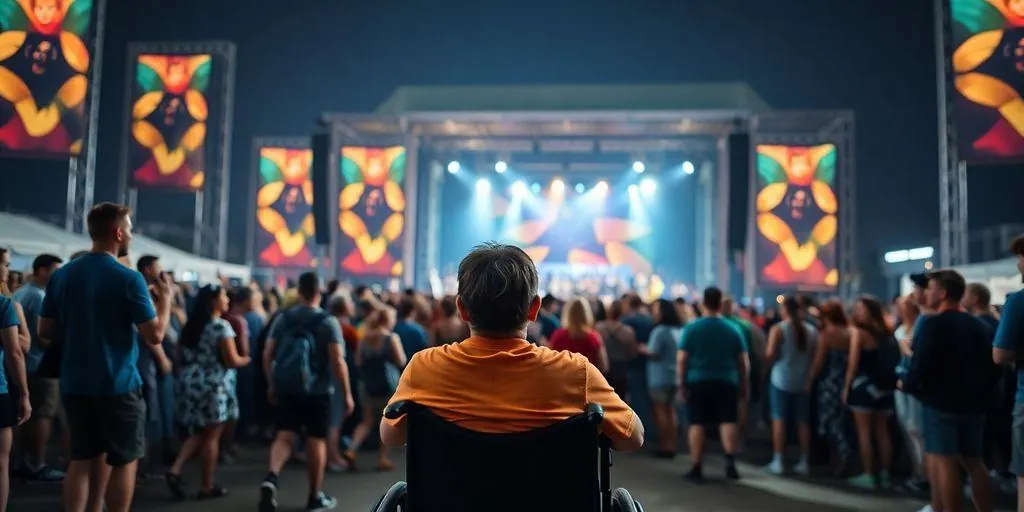
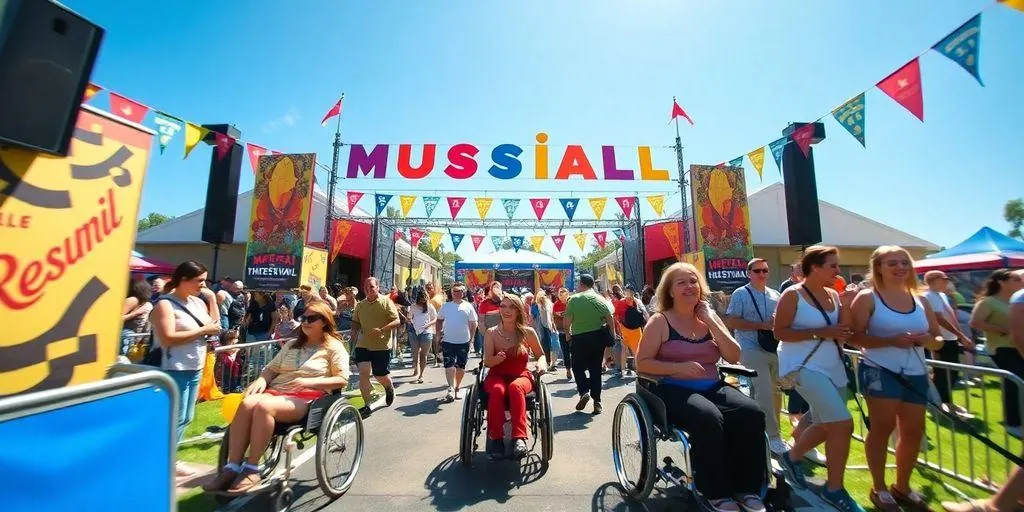
Okay, so you've got your website up to snuff, but what about the actual festival grounds? Physical accessibility is super important. We're talking ramps, accessible restrooms, designated viewing areas, and clear pathways. Think about it from the perspective of someone using a wheelchair or someone with limited mobility. Can they easily get around and enjoy the event? It's not just about meeting the bare minimum; it's about creating a welcoming environment for everyone.
Here's a quick checklist:
- Ramps and elevators where needed
- Accessible restrooms clearly marked
- Designated seating areas with good sightlines
- Wide, unobstructed pathways
Making these changes isn't just about compliance; it's about showing that you value all your attendees. It's about making sure everyone feels welcome and included.
Considering non-visible disabilities
It's easy to focus on the things you can see, but non-visible disabilities are just as important to consider. This includes things like sensory sensitivities, autism, chronic pain, and mental health conditions. What can you do to make the festival more comfortable for people with these needs? Providing quiet zones, sensory maps, and clear communication about potential triggers can make a huge difference. Also, train your staff to be aware and understanding of these challenges. True inclusion requires more than just ramps.
Some ideas to consider:
- Offer a designated quiet zone for people who need a break from the noise and crowds
- Create a sensory map that highlights areas with high or low sensory stimulation
- Provide clear information about potential triggers, such as flashing lights or loud noises
- Train staff to be understanding and supportive of people with non-visible disabilities
Creating an inclusive experience for all attendees
Ultimately, it's about creating a culture of inclusion. This means going beyond just meeting the legal requirements and actively working to make everyone feel welcome and respected. This could involve things like offering a variety of food options to accommodate dietary restrictions, providing sign language interpretation for performances, and ensuring that all staff are trained in disability awareness. Remember, accessibility isn't just a checklist; it's a mindset. By prioritizing inclusion, you can create a festival that is truly enjoyable for everyone. Think about offering accessible formats for all your documents.
Here are some final thoughts:
- Actively seek feedback from people with disabilities to identify areas for improvement
- Partner with disability organizations to promote your event and ensure it is accessible
- Celebrate diversity and inclusion in all aspects of the festival
Benefits of EU Accessibility Act Compliance
Complying with the European Accessibility Act isn’t just about avoiding penalties, it’s a chance to strengthen your business. By making products and services more accessible, companies can reach a larger audience, improve customer satisfaction, and build a reputation for inclusivity. Accessibility also reduces friction in user journeys, leading to higher engagement, better retention, and new market opportunities across the EU.
Expanding market reach and audience engagement
Going beyond just ticking boxes, the EU Accessibility Act opens doors to a bigger audience. By making your festival accessible, you're inviting everyone to participate. Think about it, people with disabilities, their families, and friends, that's a huge segment of the population you could be missing out on. Plus, accessible events tend to be more user-friendly for everyone, not just those with specific needs. It's a win-win.
Enhancing brand reputation and social responsibility
In today's world, people care about where they spend their money. They want to support businesses that align with their values. Complying with the EU Accessibility Act shows that you're committed to inclusion and social responsibility. This can significantly boost your brand's reputation and make you more attractive to attendees, sponsors, and partners. It's about doing the right thing and getting recognized for it.
Mitigating legal and financial risks
Let's be real, nobody wants to get sued. The EU Accessibility Act is the law, and non-compliance can lead to hefty fines and legal battles. By taking accessibility seriously, you're protecting your festival from potential legal and financial risks. It's an investment in your festival's future and stability.
Think of accessibility not as a burden, but as an opportunity. It's a chance to create a more welcoming and inclusive event, build a stronger brand, and avoid legal troubles. It's about making your festival the best it can be for everyone.
Navigating Global Accessibility Legislation