Planning an event means thinking about a lot of things, and these days, how it affects the planet is a big one. People are really starting to care about the environment, and that includes events. We're talking about everything from small gatherings to big conferences. It’s all about figuring out the carbon footprint tracking for live events, which is just a fancy way of saying we need to see how much carbon pollution an event creates. Then, we can work on making it better. This guide will walk you through how to do just that, step by step, so your next event can be more eco-friendly.
Key Takeaways
- Knowing your event's carbon footprint is the first step to making it greener.
- There are good ways to measure event emissions, like using international rules.
- You can make a plan to cut down on pollution from your event, even by doing things like hybrid models.
- For pollution you can't avoid, you can buy carbon offsets to help the environment.
- Making your event carbon neutral shows you care about the planet and can even make your event look better.
Understanding Your Event's Carbon Footprint
Defining Carbon Footprint for Live Events
Okay, so what is a carbon footprint when we're talking about events? Basically, it's the total amount of greenhouse gases, think carbon dioxide, methane, and a few others, that are released into the atmosphere because of your event. This includes everything from the energy used to power the venue to the transportation of attendees and the waste generated. It's a way of measuring the overall impact your event has on the climate.
It's easy to overlook some of the smaller things that contribute to your event's carbon footprint, but they all add up. Thinking about these things upfront can make a big difference.
Key Factors Contributing to Emissions
Lots of things contribute to an event's carbon footprint. Here are some of the big ones:
- Venue Energy Consumption: Lighting, heating, and cooling can use a lot of energy, especially in large venues.
- Transportation: How people get to and from the event, flights, trains, cars, makes a huge difference.
- Food and Beverage: The sourcing, preparation, and disposal of food and drinks all have an impact. Think about local vs. imported, meat vs. vegetarian options, and how much food ends up in the trash.
- Waste Generation: All the trash produced at the event, from paper cups to decorations, contributes to emissions.
- Accommodation: If attendees need hotels, that adds to the footprint too.
Why Carbon Footprint Tracking for Live Events Matters
Why should you even bother tracking your event's carbon footprint? Well, for starters, it's about being responsible. Events can have a significant impact, and it's important to understand and minimize that impact. Tracking helps you identify where the biggest problems are so you can focus your efforts on making improvements. Plus, more and more attendees are starting to care about sustainability, so showing that you're taking action can boost your reputation. Finally, it can even save you money in the long run by identifying areas where you can reduce waste and energy consumption.
Measuring Event-Related Emissions Accurately

It's easy to say you want to reduce your event's impact, but you can't manage what you don't measure. Getting a handle on your event's carbon footprint is the first, and arguably most important, step. It's like figuring out where your money goes before you start budgeting, you need to know the numbers.
Utilizing International Standards for Measurement
When it comes to measuring emissions, you can't just wing it. You need to use established, internationally recognized standards. Think of it like baking a cake, you wouldn't just throw in random ingredients and hope for the best, right? You'd follow a recipe. Similarly, standards like the ISO provide a framework for accurate carbon measurement, ensuring that your calculations are consistent and reliable. This is important for comparing your event's performance over time and against other events.
Comprehensive Carbon Footprint Tracking for Live Events
To really understand your event's impact, you need to track everything. This means looking at all aspects of the event lifecycle, from the energy used to power the venue to the waste generated by attendees. It's not enough to just look at the big things; you need to consider all the smaller details too. Here's a breakdown of what comprehensive tracking involves:
- Scope 1 Emissions: Direct emissions from sources you own or control (e.g., generators).
- Scope 2 Emissions: Indirect emissions from the generation of purchased electricity, heat, or steam.
- Scope 3 Emissions: All other indirect emissions that occur in your event's value chain (e.g., transportation, catering, accommodation).
Getting a complete picture of your event's carbon footprint requires a detailed assessment of all emission sources. This includes everything from venue energy consumption and transportation to waste management and attendee activities. By understanding the full scope of your impact, you can develop targeted strategies for reduction and offsetting.
Identifying Emission Hotspots
Once you've gathered all the data, the next step is to figure out where the biggest problems are. Which areas are contributing the most to your event's carbon footprint? These are your emission hotspots. Maybe it's the transportation of attendees, the energy consumption of the venue, or the waste generated during the event. Identifying these hotspots allows you to focus your efforts on the areas where you can make the biggest difference.
Here's a simple table to illustrate how to identify hotspots:
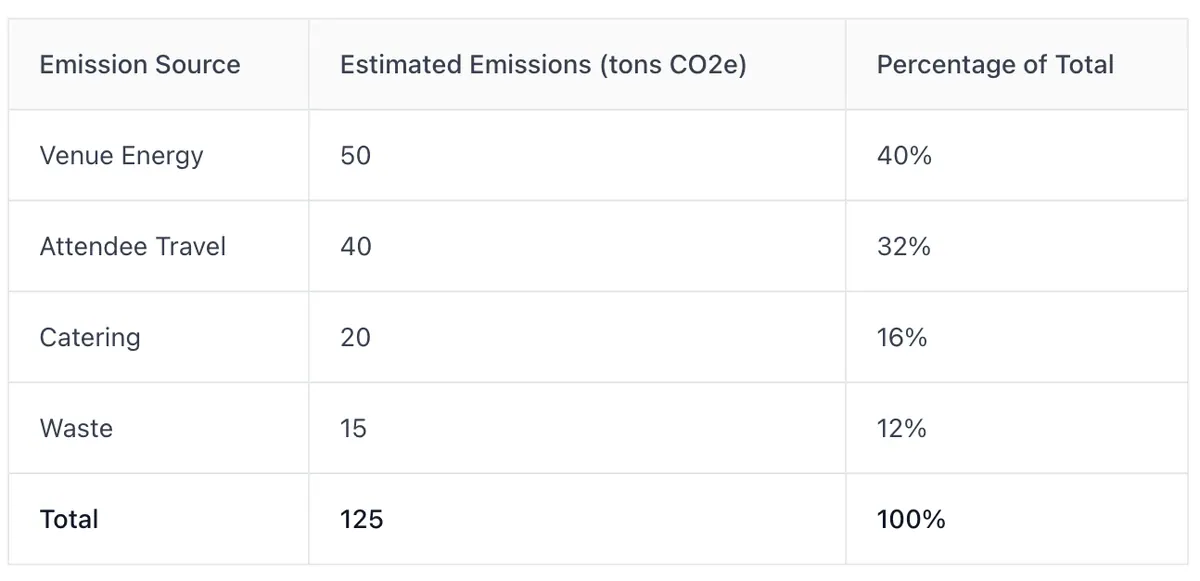
As you can see, venue energy and attendee travel are the biggest contributors, so those are the areas you'd want to focus on first. You can use this information to make informed decisions about how to reduce your event's impact. For example, you might consider switching to a renewable energy source for the venue or encouraging attendees to use public transportation. Understanding your event's carbon footprint is the first step towards creating a more sustainable event.
Developing a Mitigation Plan to Reduce Emissions
Okay, so you've figured out where your event's carbon is coming from. Now what? Time to actually do something about it! This is where you create a plan to cut those emissions down. It's not always easy, but it's super important.
Strategies for Cutting Down on Event Emissions
There are a bunch of ways to tackle this. One of the biggest things you can do is look at your energy use. Are you using a venue powered by renewable energy? If not, can you find one that is? What about the food? Sourcing local and seasonal ingredients can make a big difference. Here's a quick list of ideas:
- Use renewable energy sources.
- Source food and drinks locally.
- Reduce waste by using reusable materials.
- Encourage attendees to use public transport.
The Impact of Hybrid Event Models
Think about going hybrid. Seriously. If you can get some of your attendees to participate virtually, you're cutting down on travel emissions big time. Plus, it can actually increase your reach. More people can attend if they don't have to travel! It's a win-win.
Hybrid events can significantly reduce your carbon footprint by decreasing travel-related emissions. They also offer increased accessibility and broader audience engagement, making them a sustainable and inclusive choice.
Sustainable Practices for Event Operations
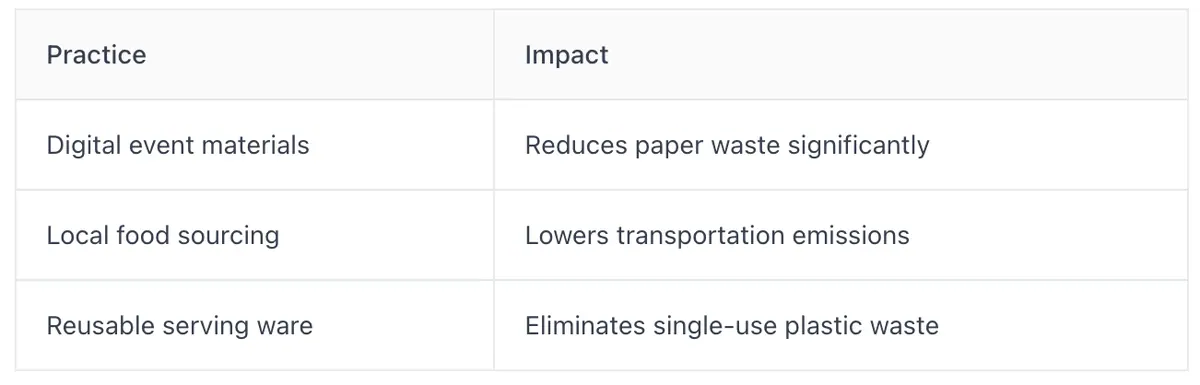
It's all about making smart choices. Ditch the single-use plastics. Go digital with your event materials. Encourage attendees to bring their own water bottles. Even small changes can add up. Here's a table showing potential impact:
Offsetting Unavoidable Carbon Emissions
Okay, so you've done everything you can to reduce your event's carbon footprint. You've cut down on waste, chosen a sustainable venue, and encouraged attendees to use public transport. But let's face it, some emissions are just unavoidable. That's where carbon offsetting comes in. It's not a get-out-of-jail-free card, but it's a way to balance the scales.
The Role of Carbon Offsets in Event Sustainability
Carbon offsets allow you to compensate for your event's remaining emissions by investing in projects that reduce greenhouse gases elsewhere. Think of it as balancing a checkbook, you're essentially 'canceling out' your event's impact. It's important to remember that offsetting should be a last resort, after you've exhausted all other reduction strategies. It's not about buying your way out of responsibility; it's about taking accountability for the emissions you can't eliminate.
Selecting High-Quality Carbon Credits
Not all carbon credits are created equal. You need to do your homework to make sure you're investing in projects that are actually making a difference. Look for credits that are:
- Verified: By a reputable third-party organization. This ensures the project is actually reducing emissions as claimed.
- Additional: Meaning the emission reductions wouldn't have happened without the carbon offset funding.
- Permanent: The emission reductions are long-lasting and not easily reversed.
- Real: The project is actually happening and not just a paper exercise.
Choosing the right carbon credits can be tricky. It's worth doing some research and potentially working with a reputable provider to ensure your investment is making a real impact. Don't be afraid to ask questions and demand transparency.
Financing Ecological Projects Through Offsetting
When you purchase carbon credits, you're essentially financing projects that reduce greenhouse gases. These projects can take many forms, such as:
- Reforestation and afforestation (planting new forests).
- Renewable energy projects (solar, wind, hydro).
- Energy efficiency improvements (reducing energy consumption in buildings or industry).
- Methane capture (preventing methane from escaping into the atmosphere).
By investing in these projects, you're not only offsetting your event's emissions but also supporting sustainable development and environmental conservation. It's a win-win situation. You can even choose local projects to show your support for environmental initiatives in Canada. This helps you achieve your carbon neutrality objectives by supporting certified ecological projects.
Achieving Carbon Neutrality for Your Event
What Defines a Carbon Neutral Event?
So, what exactly is a carbon neutral event? It's an event where you've balanced the carbon emissions with carbon removal. Basically, you're not adding any net carbon dioxide into the atmosphere. This doesn't mean you have zero emissions, but rather that you've offset any emissions produced. Think of it like balancing a checkbook, emissions are like expenses, and offsets are like deposits. You want to end up with a zero balance. It's a big deal for showing you care about the environment and want to reduce CO₂ emissions.
The Process of Becoming Carbon Neutral
Okay, so you want to make your event carbon neutral? Here's a simplified breakdown:
- Measure your event's carbon footprint. This includes everything from venue energy use to attendee travel.
- Reduce emissions where possible. Can you use a more energy-efficient venue? Encourage public transport? Serve locally sourced food?
- Offset the remaining emissions. This usually involves purchasing carbon credits that support projects that reduce or remove carbon from the atmosphere.
- Get verified! Have a third party check your calculations and offsets to ensure everything is legit.
Becoming carbon neutral isn't just about buying offsets. It's about making a genuine effort to reduce your impact in the first place. Offsets should be a last resort, not the first thing you think about.
Benefits of Hosting a Carbon Neutral Event
Why bother going through all this trouble? Well, there are several good reasons:
- Reputation boost: Shows your organization cares about the environment.
- Attracts attendees: More people are looking for sustainable events.
- Positive impact: You're actually helping the planet!
- Sets an example: Encourages others to follow suit.
It's not just about feeling good; it's about doing good. Plus, it can give you a competitive edge. People are increasingly aware of environmental issues, and they're more likely to support businesses and events that are taking action. Hosting carbon neutral events is a great way to show you're serious about sustainability.
Engaging Participants in Sustainability Efforts