So, you've got a killer concert coming up and you want people to know about it. That's where a good press release comes in. Think of it as your ticket to getting other people talking about your show. But honestly, sending out a bunch of emails hoping for the best isn't really the way to go. Journalists get swamped with these things every single day. You need to make sure yours actually gets read and, more importantly, makes them want to cover your event. It’s not just about announcing a show; it’s about telling a story they can use.
Crafting Your Concert Press Release
When you're trying to get the word out about a concert, a press release is your main tool. Think of it like this, journalists get tons of these things every single day, so yours needs to be clear, direct, and give them everything they need right away. If it's confusing or buried in fluff, it's probably just going to get ignored.
Focus on a compelling title
The title is your first, and sometimes only, chance to grab a journalist's attention. It needs to be more than just the band name and date. What's the hook? Is it a rare reunion show, a unique venue, or a special guest? Make the title tell a mini-story that makes them want to read more. Something like "Local Indie Darlings 'The Wandering Souls' Return for One Night Only" is way better than just "The Wandering Souls Concert."
Keep language simple and direct
Journalists are busy. They don't have time to decipher flowery language or marketing jargon. Get straight to the point. Use clear, everyday words. Avoid stuffing your release with adjectives that don't add real information. Think about what a journalist needs to know to write a story, not what you want to brag about.
Answer the essential 'W' questions
This is non-negotiable. Your press release needs to answer the basic questions immediately, Who is performing? What kind of music is it? When is the show? Where is it happening? Why should people care? And sometimes, how can people get tickets? If any of these are missing, the journalist will have to do extra work, and they might not bother.
Here's a quick checklist:
- Who: Artist/Band name(s)
- What: Type of music, special guests, event theme
- When: Date and time (doors open, show starts)
- Where: Venue name and full address
- Why: What makes this show noteworthy?
- How: Ticket prices, where to buy them (website URL)
Targeting the Right Media Contacts
So, you've got this killer concert, right? The music's tight, the venue's booked, and you're ready to rock. But how do you get the word out to the people who can actually make a difference? It all starts with figuring out who to send your press release to. Sending it to every single journalist you can find is like shouting into the void, mostly ineffective and a waste of your time.
Identify relevant journalists and outlets
Think about it: a local music blog is probably more interested in your indie band's upcoming gig than a national business journal. You need to be smart about this. Start by listing out the types of media that cover live music in your area or genre. This could include:
- Local newspapers (arts and entertainment sections)
- City magazines
- Music blogs and websites
- College radio stations
- Community newspapers
- Regional lifestyle publications
The goal is to find outlets whose readers or listeners are likely to be interested in your concert. It’s about quality over quantity. A few well-chosen contacts who are genuinely interested will get you much further than a hundred who will just delete your email. You can often find these by looking at who has covered similar artists or events in the past. For example, if you're promoting a folk artist, look for who reviewed that other folk act that came through town last month. It's a bit of detective work, but it pays off. You might even find some great niche publications that are perfect for your specific event, like those focusing on specific music genres.
Build and maintain a contact spreadsheet
Once you start identifying potential contacts, you need a system to keep track of them. A simple spreadsheet is your best friend here. Don't just dump names in; organize it. Here’s what you should include:
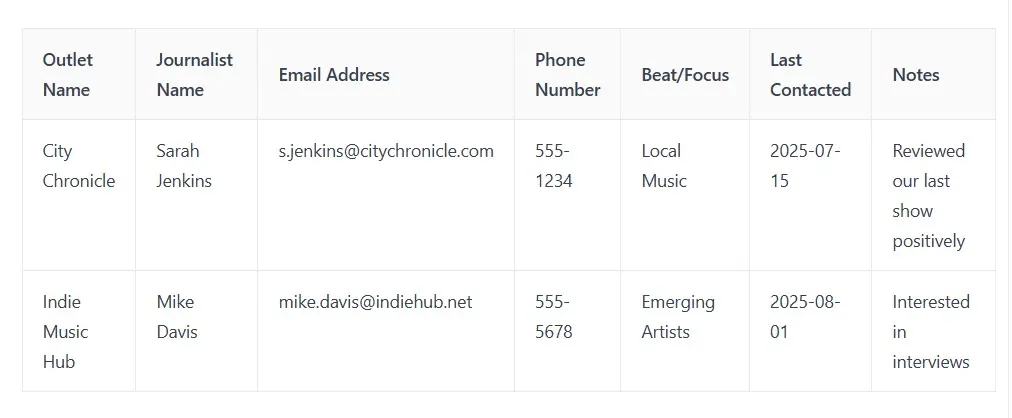
Keeping this updated is key. When you send out a release, note the date. If you get a response, note that too. This helps you avoid contacting the same person too often and shows you’re organized when you do reach out. It also helps you remember who responded well to your previous pitches, so you can prioritize them.
Understand media needs and angles
Journalists aren't just looking for information; they're looking for a story. Your press release needs to give them something compelling to write about. What's the unique angle for your concert? Is it a reunion of a beloved local band? A debut performance of a new artist? A charity event?
Think about what makes your concert newsworthy. What's the hook that will grab a reader's attention and make them want to know more? It's not just about announcing a show; it's about telling a story that fits their audience.
Different journalists will also have different needs. A TV crew might want a soundbite from the band, while a print journalist might want a more in-depth interview. A blogger might just need a few good photos and a quick summary. Tailor your follow-up and the information you offer based on what you know about the outlet and the journalist. Being considerate of their time and needs is how you build those important relationships that lead to consistent coverage.
Essential Components of a Press Release
When you're sending out information about a concert, you've got to make it easy for journalists to do their job. They're busy people, getting tons of emails every day. So, your press release needs to be clear, packed with the right stuff, and simple to use. Think of it as giving them all the ingredients for a good story without making them hunt for them.
Include high quality, relevant attachments
Forget about fancy fonts or a million colors. What journalists really want are good photos and maybe a poster if it looks professional. These visuals help them tell the story. Make sure the pictures are clear and not too big, so they don't clog up an email. If you have a band photo or a tour poster that looks sharp, include it. Just keep it to what's actually useful for their article or broadcast.
Provide a clear URL for more information
It's a good idea to point journalists to a place where they can get more details if they need them. This isn't for your Facebook event page, though. Think more along the lines of your official website or the ticketing page. This gives them a direct link to the facts they might need for their reporting, like ticket prices or venue details.
Ensure all key details are present
This is where you answer the basic questions: Who is playing? What kind of music is it? When and where is the show? What's the ticket price? Having all this information right there in the release means the journalist doesn't have to guess or search for it. It saves them time and makes your event look more organized. Basically, if it's important for someone to know about the concert, it should be in the release.
The Importance of Professionalism