So, the big event is over. Everyone packed up, the lights are off, and the buzz is fading. But guess what? The party doesn't have to end there. This is actually the perfect time to connect with attendees again and offer them something more. We're talking about post-event upselling strategies, turning that one-time interaction into a lasting relationship and, yep, more sales. It's not about being pushy; it's about giving people what they might really want next. Let's dig into how you can do that without feeling weird about it.
Key Takeaways
- Use data to figure out what people might want next. It's like knowing their favorite snack before they even ask.
- Tech tools can help you send out offers automatically. Think of it as having a super-organized assistant.
- Make sure your team knows how to talk about new products or services. Practice helps a lot here.
- Always check your results. See what worked and what didn't so you can do better next time.
- Look for new ways to keep people engaged, like special memberships or unique experiences.
Strategies for Seamless Cross-Selling
Cross-selling at events is like conducting an orchestra, each instrument (or product) needs to harmonize to create a beautiful symphony (customer experience). It's not just about pushing more stuff; it's about making the event better for everyone. When done right, cross-selling boosts revenue and makes attendees happier, eager for the next event.
Identifying Complementary Offerings
Think of it like this: what goes well together? The goal is to find products or services that naturally enhance the main event. For example, at a book festival, you could cross-sell signed copies or writing workshops. At a concert, maybe offer official merchandise or early access passes. It's about understanding what attendees are already interested in and providing related options that add value.
Leveraging Data Insights for Personalized Offers
Data is your friend. Use it! Look at past attendee behavior to figure out what people might want. Did someone buy a VIP ticket last year? Offer them an even better VIP experience this year. Did they attend a specific workshop? Suggest a related advanced course. Personalization is key. If you know your audience, you can make relevant suggestions that they're more likely to accept.
The Importance of Timely Offers
Timing is everything. Don't wait until after the event to offer a discount on next year's tickets. Do it right after they buy their initial ticket, when they're already excited. Offer a hotel discount immediately after someone registers for an out-of-town event. The closer the offer is to the initial purchase, the more likely people are to take advantage of it. Think of it as striking while the iron is hot. Following up post-event is also important.
Cross-selling isn't about being pushy; it's about anticipating needs and providing solutions. It's about making the event experience more complete and satisfying for attendees. When you focus on adding value, the sales will follow.
Leveraging Technology for Post-Event Upselling Success
Technology is a game-changer when it comes to post-event upselling. It's not just about sending a generic email blast; it's about using the tools at your disposal to create personalized experiences that drive sales. Let's look at how you can make tech work for you.
Automated Follow-Up Sequences
Setting up automated follow-up sequences is a must. Think of it as a digital sales assistant that works around the clock. You can use email marketing platforms to create a series of messages triggered by specific actions, like attending a particular session or downloading a resource. For example:
- Day 1: Thank you email with a recap of the event's highlights.
- Day 3: Offer a discount on a related product or service.
- Day 7: Share a case study or testimonial showcasing the value of your premium services.
- Day 14: Final reminder about the offer, creating a sense of urgency.
Personalized Offerings Through AI
AI can take personalization to the next level. By analyzing attendee data, AI algorithms can identify patterns and predict what each individual is most likely to be interested in. This allows you to create highly targeted offers that feel relevant and valuable. Imagine suggesting a specific workshop to someone based on the sessions they attended at the event. It's like reading their mind!
Integrated CRM for Customer Journey Mapping
Having a CRM (Customer Relationship Management) system that's integrated with your other event tech is super important. It gives you a 360-degree view of each customer's journey, from initial registration to post-event engagement. This allows you to track their interactions, identify pain points, and tailor your upselling efforts accordingly. With a CRM, you can see what content they've consumed, what emails they've opened, and what purchases they've made. This data is gold when it comes to crafting personalized offers that resonate.
Using technology in this way isn't just about making more sales; it's about building stronger relationships with your customers. By providing them with relevant and valuable offers, you're showing them that you understand their needs and are committed to helping them succeed.
Training Your Team for Post-Event Upselling and Cross-Selling

It's easy to overlook the importance of training, but a well-prepared team is essential for successful post-event upselling and cross-selling. You can have the best tech and data, but if your team can't connect with clients and present relevant upsell opportunities, it's all for nothing. Let's look at how to get your team ready.
Understanding the Client's Vision
First, your team needs to really get what the client is trying to achieve. It's not just about selling more stuff; it's about helping the client make their event even better. This starts with active listening and asking the right questions. For example, if a client held a conference focused on sustainability, your team should understand that and tailor any post-event offers accordingly. Maybe suggest a package that includes carbon offsetting for future events or eco-friendly merchandise options. It's about showing you understand their goals.
Empowering Staff with Product Knowledge
Your team needs to know the product inside and out. They should be able to answer any question about post-event follow up and explain the benefits of each potential upsell or cross-sell. This means more than just reading a product sheet. Hold regular training sessions where they can try out the products, ask questions, and learn how to position them effectively. Make sure they understand how each product or service can solve a client's specific problem or enhance their future events.
Role-Playing for Effective Upsell Scenarios
Theory is great, but practice is better. Set up role-playing scenarios where your team can practice their upselling and cross-selling techniques. This helps them get comfortable with different situations and learn how to handle objections. For example, simulate a client who is hesitant to invest in additional services. How does your team respond? What benefits do they highlight? Role-playing helps them refine their approach and build confidence. It's also a good way to identify any gaps in their knowledge or skills.
Training isn't a one-time thing. It's an ongoing process. The event landscape is always changing, and your team needs to stay up-to-date on the latest trends and techniques. Regular training sessions, feedback, and coaching are key to ensuring they're always at their best.
Measuring the Impact of Your Post-Event Upselling Strategies

It's easy to get caught up in the excitement of an event and the immediate aftermath, but it's important to take a step back and see if your upselling strategies actually worked. Did they bring in more money? Did customers like the extra stuff they bought? Answering these questions helps you make smarter choices for future events. Without measuring, you're just guessing.
Key Performance Indicators for Upsell Success
KPIs are your best friends when it comes to measuring success. Here are a few to keep an eye on:
- Upsell Conversion Rate: What percentage of attendees actually took you up on your upsell offers? A low rate might mean your offers aren't appealing or aren't targeted well.
- Average Upsell Value: How much extra revenue did each upsell generate, on average? This tells you which upsells are most profitable.
- Total Upsell Revenue: The big picture number, how much total revenue came from upselling efforts? This shows the overall impact of your strategy.
- Customer Satisfaction Scores: Did people who bought upsells feel like they got their money's worth? Happy customers are repeat customers.
Analyzing Customer Lifetime Value
Upselling isn't just about making a quick buck. It's about building relationships and increasing customer lifetime value. Think about it: if someone has a great experience at your event because they upgraded to a VIP package, they're more likely to come back next year and maybe even bring friends.
By tracking how upselling affects customer retention and future spending, you can get a better sense of the long-term ROI of your upselling efforts. It's not just about the money you made at the event; it's about the money you'll make in the future.
Feedback Loops for Continuous Improvement
Don't just set it and forget it! Create a system for gathering feedback and using it to improve your upselling strategies. This could involve:
- Post-event surveys: Ask attendees what they thought of the upsell offers and whether they felt they were worth the money.
- Analyzing sales data: Look for patterns in which upsells were most popular and which ones flopped.
- Talking to your team: Get input from the people who were on the ground, interacting with attendees. They may have valuable insights into what worked and what didn't.
Here's an example of how you might track your upselling performance over time:
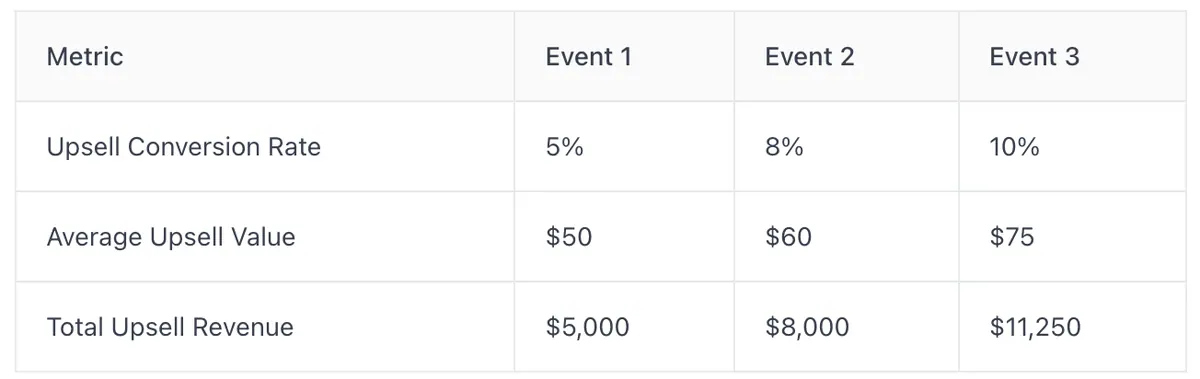
By consistently tracking these metrics and using feedback to refine your approach, you can turn your post-event upselling into a well-oiled machine.
Post-Event Upselling and Cross-Selling Wins
It's one thing to talk about upselling and cross-selling, but it's another to see it in action. Let's look at some real-world examples where these strategies have paid off big time. These aren't just theoretical wins; they're proof that a well-executed post-event strategy can seriously boost your bottom line and make customers happier.
Showcasing Successful Upsell Case Studies
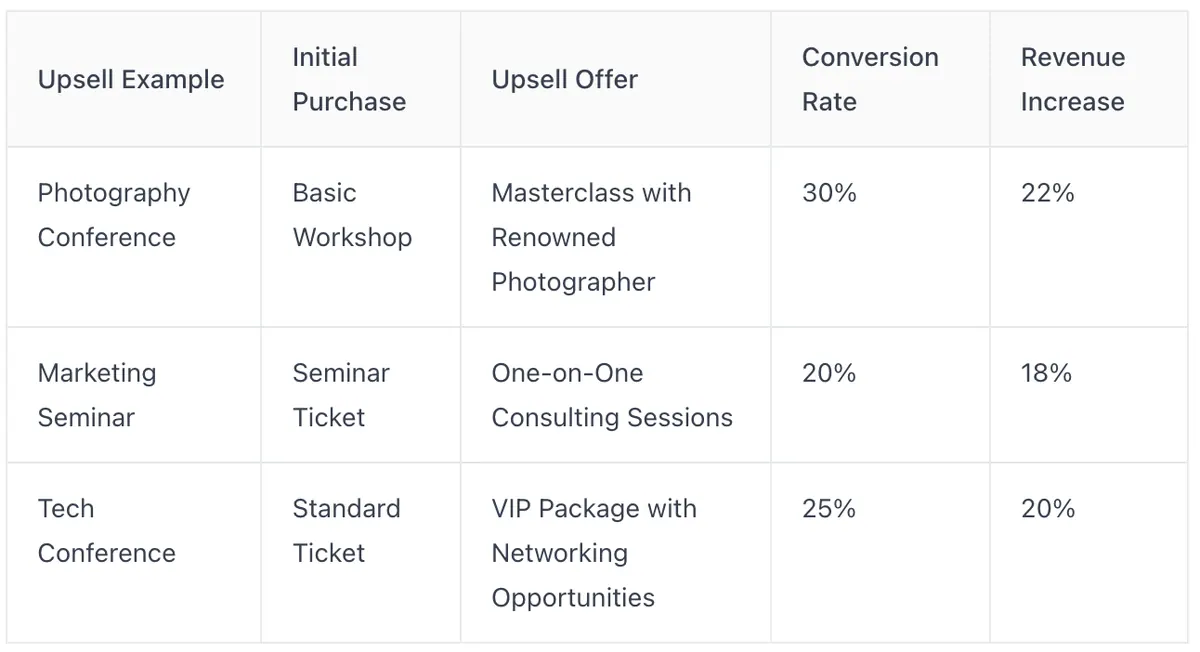
Think about a photography conference. Attendees initially sign up for basic workshops. But, what if they were offered an exclusive masterclass with a renowned photographer as an upsell? One conference saw a 30% conversion rate on this upsell, resulting in a significant revenue increase. Another example is a marketing seminar where attendees were offered a premium package including one-on-one consulting sessions. The results speak for themselves: