You know, sometimes you just need to get people moving. Whether it's clearing out old stock or launching something new, creating a sense of urgency can really make a difference. It's not about tricking people, but more about giving them a good nudge to act on something they might already be interested in. We're talking about those last-minute sales that get people clicking before a deadline hits. It's a classic marketing move, and when done right, it works.
Countdown Timers
You know those little clocks ticking down on websites? Those are countdown timers, and they're seriously good at making people buy stuff now. It’s all about that FOMO, the fear of missing out. When you see a timer, it’s like a little nudge saying, “Hey, this deal won’t last forever, better grab it!” It’s a simple visual cue, but it really works to get people off the fence.
Think about it, a sale ending in 2 hours versus a sale that’s just… on. Which one makes you move faster? Exactly. They’re great for flash sales, limited time offers, or even just getting someone to finish their checkout before the special discount disappears. We’ve seen them boost conversions significantly, sometimes by a huge amount, especially when they’re placed right where the action is, like next to the ‘buy now’ button. It’s a straightforward way to add a bit of pressure, but in a good way, making the offer feel more special.
Countdown timers provide a clear, visual cue of a closing window of opportunity. This immediate representation of time slipping away can dramatically increase conversion rates when used correctly.
Here’s a quick rundown of how to use them effectively:
- Placement is Key: Put them on product pages, in the shopping cart, or on checkout pages. Anywhere a customer is about to make a decision is a good spot
- Keep it Relevant: Make sure the timer is tied to a real event, like a sale ending or a special offer expiring. Don’t just put one up for no reason
- Mobile Matters: On phones, timers need to be smaller and less intrusive. They still need to create urgency, but without taking over the whole screen
- Test It Out: See what works best for your audience. Sometimes a simple number is better, other times a more visual countdown does the trick. You can find great examples of countdown timers on pre-order pages that show how effective they can be
Using these timers is a smart move to encourage quicker purchases and make your promotions feel more exciting.
Limited Quantity and Stock Alerts
Seeing that a product is almost gone can really make you want it, right? That's exactly what limited quantity and stock alerts do. They tap into that feeling of "I better grab this now before it's too late." It's all about showing people that items are scarce.
When customers see that inventory is running low, it creates a compelling reason to act quickly. Displaying real-time inventory updates uses both scarcity and social proof, if others are buying fast enough to deplete stock, the product must be pretty good.
Here’s how to use them effectively:
- Be Honest: Always connect these alerts to your actual inventory. Fake scarcity just breaks trust, and once that's gone, it's hard to get back
- Show It Everywhere: Put these alerts on product pages, in the shopping cart, and even during checkout. Seeing it multiple times reinforces the message
- Find the Sweet Spot: For most items, a good threshold for alerts is usually between 3 to 10 units left. Too high, and it feels fake; too low, and you miss chances to push sales
Think about messages like "Only 5 left in stock!" or "Going fast, only 2 remaining." These simple phrases can make a big difference in getting someone to click that buy button.
Using these alerts honestly and consistently across your site can significantly boost conversions by making customers feel the need to act now.
Flash Sales
Flash sales are a classic for a reason. They create a powerful sense of urgency by offering significant discounts for a very short period. Think of it as a limited time sprint to a great deal. This intense, time bound nature encourages immediate purchasing decisions, cutting down on hesitation and "I'll think about it later" moments. Customers know that if they don't act fast, the amazing price will disappear.
These sales work by tapping into our natural inclination to avoid missing out. When a deal is only available for a few hours, or maybe a day, it feels like a special opportunity that needs to be seized. It’s not just about saving money; it’s about the thrill of snagging a bargain before anyone else does.
Here’s a quick look at how they can be structured:
- Duration: Keep it short, 4 hours, 24 hours, or maybe 48 hours. The shorter, the more urgent it feels
- Discount Level: Offer a substantial discount. Something that really makes people stop and take notice
- Product Focus: You can run a flash sale on a specific product, a category, or even your entire store
A well-run flash sale can actually bring in more revenue than a whole week of normal sales. It’s all about that concentrated burst of buying activity. People see the clock ticking and decide to buy now, rather than waiting around.
When you run a flash sale, customers often end up buying other things too, not just the sale items. It’s a great way to get people onto your site and browsing, and they might just add a few extra things to their cart while they’re there. Just remember not to do them too often, or people will just start waiting for the next one instead of buying at regular prices.
Email Sequences
Email sequences are your secret weapon for turning a fleeting moment into a solid sale. Think of them as a well timed conversation, guiding your customer from interest to action. A carefully crafted sequence can make all the difference. It’s not just about sending one email, it’s about building a narrative that respects the customer’s time and nudges them forward. For instance, a flash sale needs a different approach than recovering an abandoned cart. You want to build anticipation, announce the event, remind them as time ticks down, and maybe even offer a final call. This structured communication helps manage expectations and reinforces the limited time nature of your offer. It’s about being present without being annoying. We’ve seen sequences that recover up to 30% of abandoned carts, which is pretty significant when you think about it. Getting the timing right is key, with the first message often sent within an hour of abandonment. Then, you might follow up within 24 hours with a small incentive, and perhaps a final push within 72 hours. Testing different subject lines is also a smart move; something like "Did you forget something?" can work wonders. It’s all about creating a sense of immediacy and value. You can set these up to run automatically, which is a huge time saver. This allows you to focus on other parts of your business while still capturing those nearly lost sales. It’s a way to build a relationship and drive sales without constant manual effort. You can find great tools to help you set up these automated workflows, making the whole process much smoother. This is a great way to boost your sales through email marketing.
Abandoned Cart Recovery
It's a common story, someone browses your site, adds a few things to their cart, maybe even gets to the checkout page, and then… poof. They disappear. This is abandoned cart syndrome, and it's a huge opportunity you're likely missing out on. Getting those almost customers back is where the real magic happens in those final 72 hours.
Think about it. These aren't cold leads, they've already shown interest and taken action. They just need a little nudge. A well timed email sequence can be incredibly effective here. We're talking about bringing back those nearly lost sales with minimal fuss.
Here’s a breakdown of how to approach it:
- First Touch (Within 1 Hour): Send a simple reminder. No discounts yet. Just a friendly heads-up like, "Hey, you left something behind!" Include a clear picture of the item and a direct link back to their cart. Keep it short and sweet
- Second Touch (Within 24 Hours): Now's the time to introduce a small incentive. This could be a modest discount (like 5-10%) or free shipping. You can also add a touch of urgency, such as, "Your items are popular and might sell out soon."
- Third Touch (Within 72 Hours): This is your final push. Offer a slightly better incentive if you can, or a strong reminder that the cart is about to expire. Make it clear this is the last chance to grab those items with the special offer
Subject lines are key. Try things like "Did you forget something?" or "Your cart is waiting!" or even "Last chance for your items!" Testing different approaches will show you what works best for your audience.
Recovering abandoned carts isn't about being pushy; it's about being helpful and reminding people of something they already wanted. It's a simple way to boost sales without needing a whole new marketing campaign.
Price Anchoring
Price anchoring is a neat trick to make your deals look even better. Basically, you show the original, higher price next to the sale price. This makes the discount seem bigger, right? It’s like saying, "Look how much you're saving!" It taps into that feeling of getting a good deal, which is a big motivator for people, especially when they know the offer won't last forever.
Think about it this way:
- Showing the original price makes the sale price look like a steal. It’s a psychological nudge that says, "Buy now before this amazing price disappears."
- It highlights the potential loss. Customers see what they could be paying, and that makes them want to avoid that higher cost
- It works best when the original price is believable. If you inflate the original price too much, people will see right through it, and that can hurt your credibility
Here’s a quick look at how it can play out:
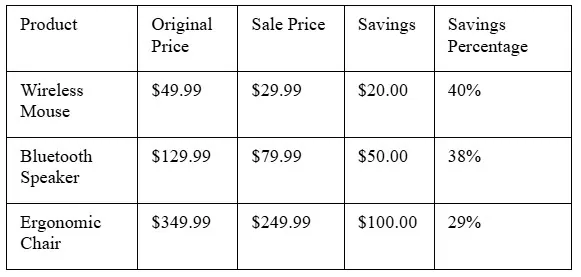
When you pair price anchoring with a ticking clock, like a 72 hour sale, you’re really amplifying the urgency. People see the big savings and know they have to act fast to grab it before the deal is gone. It’s a double whammy for creating that buy-now feeling.
Bundle Promotions
Bundle promotions are a fantastic way to get people to buy more, and fast. Think about it: you're offering a collection of related items, maybe a bestseller paired with some accessories, or a "starter kit" for something new, all at a price that's clearly better than buying them separately. This perceived value jump, combined with a strict time limit, really pushes people to act.
It’s not just about slapping a few products together, though. The sweet spot for savings is usually around 15-25% off the individual prices. Too little, and people won't bother. Too much, and you're leaving money on the table or making your products look cheap.
Here are a few ways to structure these limited-time bundles:
- Bestseller + Complementary Items: Pair your most popular product with things that naturally go with it. If you sell cameras, bundle a popular model with a memory card and a case
- Complete "Starter Kits": Great for new customers. If you sell craft supplies, offer a beginner's kit with everything needed for a specific project
- Seasonal Collections: Group themed items together. Think holiday decorations or summer beach essentials
When you promote these, be clear about the savings. Showing a specific dollar amount saved, like "Save $47," often works better than just a percentage, especially for pricier bundles.
Remember to push these bundles everywhere, your emails, social media, and website banners. The goal is to make it obvious that this is a special deal that won't last.
Free Add Ons
Think about adding something extra to your offer, but only for a limited time. It’s like getting a little bonus gift with your purchase. This isn't just about a discount; it's about adding perceived value. For instance, if you're selling an online course, you could throw in a live Q&A session with the instructor for the first 48 hours. Or maybe it's a downloadable guide that complements your main product. The key is that this add on should genuinely enhance the core offering, not just be some random item.
Here are some ideas for free add ons:
- Exclusive access to a private community forum
- A bonus chapter or extended content
- A template or checklist that helps with implementation
- A short, related video tutorial
It’s important that these extras feel special and aren’t just thrown in. If they’re too common or low quality, people won’t see the urgency. You want them to feel like they’re missing out on something good if they don’t act fast.
When you offer a free add on, make sure it's something that people actually want and that ties into the main product. A cool looking notebook that has nothing to do with the book you're selling? Probably not going to work. But a sample code file for a programming course? That's a different story.
Free Shipping Thresholds
This is a pretty solid tactic to get people to spend a bit more and, you know, actually finish their purchase. You see it everywhere: "Free shipping on orders over $50!" But here’s the kicker for driving urgency, add a time limit. Something like, "Get free shipping if you order in the next 2 hours." It really makes people think twice about leaving items in their cart.
It’s all about nudging customers to add just one more thing. A good rule of thumb is to set that threshold about 30% higher than your average order value. This way, it feels achievable, not impossible. Plus, it’s way better than just saying "Free shipping" because you can highlight the actual dollar amount saved, like "Save $8.95 on shipping." That feels more concrete.
Here’s how to make it work:
- Set the right threshold: Aim for about 30% above your average order value
- Show progress: Use a progress bar so customers can see how close they are to getting free shipping
- Suggest items: Recommend products that would help them reach the threshold
- Add a timer: Clearly display how much time is left for the free shipping offer
Mobile users especially need this information to be super clear. A sticky header that stays visible while they scroll can make a big difference in getting them to complete their purchase.
We’ve seen cart values jump by as much as 32% when these time-limited shipping thresholds are put in place. It’s a simple change that can really boost your sales.
Multi Channel Promotion Strategy
When you're trying to get people to buy something now, you can't just rely on one place to tell them about it. You need to spread the word across all the channels your customers use. Think about it: some people live in their email inboxes, others are always scrolling through social media, and some might only see your ads when they're browsing other sites.
You need a coordinated effort to make sure the message hits them everywhere. This means your email campaign, your social media posts, and any ads you're running should all be saying the same thing about the limited time offer, just in a way that fits each platform. It’s like a well rehearsed play; every actor knows their part and when to speak.
Here’s a quick look at how different channels can work together:
- Email: Great for direct communication. You can send a series of emails, a heads up, a launch announcement, a reminder, and a final call. This is where you can get a bit more detailed
- Social Media: Perfect for quick, eye catching announcements. Use strong visuals and short, punchy text. Stories are especially good because they disappear, which naturally creates urgency
- Website Banners/Pop ups: These grab attention as soon as someone lands on your site. A clear banner saying "Sale Ends Tonight!" is hard to miss
- Paid Ads: Target people who have shown interest before or fit a specific profile. Make sure the ad copy clearly states the time limit
The key is consistency in your message but tailoring the delivery to each platform. You don't want to just blast the same thing everywhere, you want it to feel natural for each channel while reinforcing the same core message: this deal won't last.
By using multiple channels, you increase the chances that your message gets seen and acted upon before the deadline passes. It’s about being where your customers are and reminding them repeatedly, but not annoyingly, that time is running out.
Audience Segmentation
When you’re trying to get people to buy something now, it really helps to know who you’re talking to. Sending the same message to everyone just doesn’t cut it anymore. You’ve got different groups of customers, right? Some might be new, some might be regulars who buy a lot, and others might have bought something once and then disappeared. Each of these groups needs a different nudge.
Think about it, someone who’s bought from you before might respond well to a “last chance” email for a product similar to what they’ve bought. But a brand new visitor? They might need a different kind of push, maybe a discount on their very first order that’s only good for a few days.
Here’s a quick breakdown of how you might split things up:
- Loyal Customers: These folks already like you. Offer them early access to sales or exclusive deals that aren’t available to the general public. It makes them feel special and encourages them to act fast
- New Visitors: They don’t know you well yet. A limited time welcome discount can be a good way to get them to make that first purchase
- Past Purchasers (Lapsed): These people bought before but haven’t recently. A special “we miss you” offer with a tight deadline might bring them back
- Cart Abandoners: They added something to their cart but didn’t buy. A reminder that the item is selling fast or that the special price is ending soon can be very effective
Tailoring your urgency message to the right segment makes it way more effective. It’s not just about saying “hurry up,” it’s about saying “hurry up, because this is specifically for you and it’s ending soon.”
Landing Page Optimization
When you're running a time sensitive promotion, the page where people actually buy your stuff needs to be on point. Think of it as the final hurdle. If it's clunky or confusing, all your hard work building urgency goes out the window. We're talking about making it super easy for someone to go from "Wow, I need this now!" to "Order placed."
First off, make sure the offer is crystal clear. What's the deal? How much time is left? What happens if they miss out? All that needs to be front and center. Using a countdown timer right on the page is a no brainer. It’s a visual reminder that time is ticking.
Also, consider the layout. You want the most important stuff, the product, the price, the call to action, to be easily seen without scrolling too much. People are impatient, especially when they feel like they might miss a deal.
Here's a quick rundown of what to focus on:
- Clear Value Proposition: What are they getting and why is it a good deal right now?
- Prominent Urgency Signals: Countdown timers, limited stock indicators, or clear end dates
- Streamlined Checkout: Remove any extra steps or confusing forms. Make it fast
- Mobile Responsiveness: Most people shop on their phones, so it has to look and work great there
Don't make people hunt for information or jump through hoops. The easier you make it to buy, the more likely they are to complete the purchase before the clock runs out. It’s all about reducing friction at that critical moment.
Finally, think about the look of the page. Sometimes, using colors like red or orange can subtly signal urgency, but don't overdo it. The goal is to guide them to buy, not overwhelm them. Keep it clean, focused, and action oriented.
Color Psychology
Colors have a way of talking to us, even when we don't realize it. When you're trying to get people to act fast, like in a 72 hour sale, the colors you use can really make a difference. Think about it: red and orange are often used to signal danger or a warning, which naturally grabs our attention and makes us feel like we need to pay attention right away. They're bright and energetic, and they just sort of scream 'look here, now!'
Using these colors strategically on your website or in your ads can subtly push people towards making a decision before time runs out. For instance, a bright red button that says "Shop Now" or an orange countdown timer can create a visual cue that something important is happening and it won't last forever.
Here's a quick look at how some colors can influence urgency:
- Red: Often associated with excitement, passion, and urgency. It can increase heart rate and attention. Great for calls to action
- Orange: Conveys enthusiasm and a sense of urgency, but is generally less aggressive than red. It’s friendly yet attention grabbing
- Yellow: Can signify caution or optimism. Used sparingly, it can draw attention to key details like a discount amount
- Black: Often used for luxury or exclusivity, but can also convey power and sophistication. When paired with a bright accent color, it can make that accent pop even more
It’s not just about slapping a red color everywhere, though. You need to make sure it fits with your brand's overall look and feel. You don't want your sale to look like a fire alarm if your brand is usually calm and collected. The goal is to use color to guide the eye and create that feeling of immediacy without being overwhelming. It’s about making the important stuff stand out so people don't miss the chance to grab a deal. You can find more about how to use color in branding at your brand's personality.
When you're picking colors for your urgent marketing push, think about what feeling you want to create. Do you want excitement? A sense of warning? Or just to make sure your offer doesn't get lost in the shuffle? The right colors can help you achieve that, making your limited-time offers even more effective.
Social Proof Indicators

Seeing what other people are doing can really push us to make a decision, especially when we're on the fence. It's like, if everyone else is buying something, it must be good, right? This is where social proof indicators come into play, and they're super effective in those final 72 hours. Think about those little pop ups that say "Sarah from Ohio just bought this" or "15 people are currently looking at this item." They're not just random messages; they're designed to show you that others are interested and acting. This taps into our natural tendency to follow the crowd and avoid missing out.
These aren't just for show, either. When you combine these signals with a ticking clock or limited stock, the effect is even stronger. It creates a sense that if you don't act fast, you might miss out on something popular or that's about to sell out. It’s a smart way to nudge hesitant buyers toward a purchase.
Here are a few ways to use them:
- Recent Purchase Alerts: "John Doe just bought this." These show immediate action and popularity
- Live Visitor Counts: "12 people are viewing this right now." This highlights current interest
- In Cart Notifications: "5 people have this in their cart." This suggests others are close to buying
- Overall Sales Numbers: "Over 500 sold this month." This shows sustained demand
It’s important to be honest with these indicators. Using fake numbers or outdated information can backfire and damage trust. When done right, though, they can significantly influence purchasing decisions. For instance, seeing that a product is popular can make it seem more desirable, influencing your own perception of its value. You can find tools that help integrate these notifications smoothly into your site, making it easy to show potential customers that they aren't alone in their interest.
Using social proof isn't just about showing popularity, it's about building confidence. When potential buyers see that others have had positive experiences or are actively engaging with a product, it reduces their perceived risk. This validation is a powerful psychological trigger, especially when time is running out.
Loss Aversion Messaging
You know how sometimes you see a deal, and it feels like if you don't grab it right now, it’ll just vanish? That’s loss aversion messaging at work. It taps into that primal fear of missing out, not just on a good thing, but on avoiding a bad outcome. Think about it: people tend to feel the sting of a loss much more sharply than the joy of an equal gain. So, instead of saying, "Get 20% off!", framing it as "Don't miss out on 20% off, offer ends soon!" often hits harder.
This isn't about tricking people. It’s about highlighting what they stand to lose if they hesitate. It’s a subtle shift, but it can make a big difference in getting someone to click that buy button.
Here are a few ways to use this effectively:
- Emphasize what’s ending: Focus on the deadline or the limited stock. Phrases like "Last chance to save" or "Only 5 left at this price" work because they point to a potential loss
- Highlight scarcity: If something is genuinely limited, say so. "Limited edition, once it's gone, it's gone" creates a clear potential loss
- Show the cost of inaction: Sometimes, you can frame it as "Prices go up tomorrow." This directly shows the financial loss of waitin.
The key is to be honest. If you say something is limited, it really needs to be limited. Customers can spot fake urgency a mile away, and that just erodes trust. When the scarcity or the deadline is real, this tactic feels less like a pushy sales pitch and more like helpful information.
It’s all about playing on that natural human tendency to avoid regret. When you frame your offers around what someone might miss, you’re tapping into a powerful motivator that can really drive action in those final 72 hours.
A/B Testing Deadline Messaging
When you're running a sale or promotion that has a hard end date, you really need to nail the messaging around that deadline. It’s not just about saying “sale ends soon.” You’ve got to test what actually gets people to click and buy.
Think about it, does “Offer ends tonight!” work better than “Last chance: Only 6 hours left”? Or maybe something like “Don’t miss out, sale ends at midnight!” is the winner. These small wording changes can make a big difference in how quickly people decide to act. It’s all about seeing what makes your specific customers feel that push to purchase before it’s too late.
Here’s a quick look at how different deadline messages might perform:
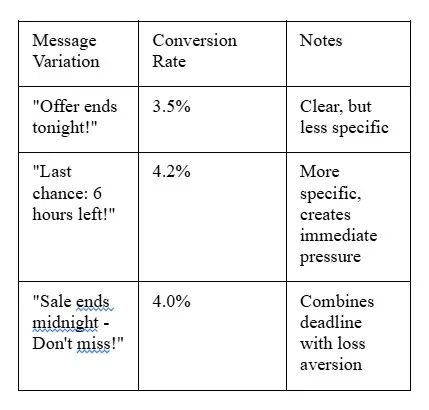
Testing these phrases helps you understand the psychological triggers that motivate your audience. It’s about finding that sweet spot between clear communication and effective persuasion, ensuring your urgency tactics are genuinely driving action, not just creating noise.
It’s worth trying out a few different approaches to see what really clicks with your audience. You might be surprised by which phrasing gets the best results. Keep an eye on those numbers, and don't be afraid to tweak your words until you find what works best.
Members Only Flash Sales
Creating sales that are only for members can really get people to sign up for your email list or loyalty program. It’s like having a secret club, and who doesn't like feeling special? You’ve probably seen those messages that say something like, “Join now for exclusive access” or “Members save an extra 15% today only.” This works because it taps into that fear of missing out, but it also plays on the desire to be treated differently. It makes customers feel valued, and that can build a stronger connection to your brand.
Think about it, if you know you can get a better deal or early access to something cool just by being a member, you’re more likely to sign up and then act fast when the sale happens. It’s a smart way to boost both immediate sales and keep customers coming back over time. For instance, Sephora’s Beauty Insider program is a great example. They give members early access to sales and special products, which not only drives sales but also encourages more people to join the program. It’s a win-win.
What makes these offers really effective?
- Early access to sales: Giving members a 24-48 hour head start before the general public can create a real buzz
- Exclusive products: Offering items that only members can buy makes the deal feel truly unique
- Member only pricing: A special discount on select items just for your members
- Limited time bonus rewards: Like double points or special gifts for members during the sale period
When you combine these exclusive perks with a clear time limit, like “Members only: 25% off ends tonight at midnight,” you create a powerful reason for people to act immediately. It’s not just about the discount; it’s about the exclusivity and the ticking clock.
For maximum impact, make sure you clearly tell people what they’re getting and when it ends. Adding a countdown timer to these member-only deals can even boost conversions by another 18%, according to some testing. It’s a solid tactic for driving sales and keeping your best customers happy and engaged. You can even start by creating an email subscriber tier that gets early or exclusive access to promotions. It’s a simple way to build your program and create that sense of urgency through exclusivity. This approach can lead to customers who are 40% more likely to stick around after a year compared to those who only buy from general sales. Check out how urgency messaging is key to driving customer action.
Early Access Periods