Putting on a great event takes a lot of work, and when it's all over, it's easy to just move on to the next thing. But if you really want to get better, you need to stop and think about what happened. This is where the event debrief comes in. It's not just about talking about what went wrong; it's about figuring out what worked, what didn't, and how you can make your next event even smoother. Think of it as turning your experiences into a guide for the future.
Structuring Your Event Debrief Process
Setting up a solid debrief process from the start is key to making sure your events get better each time. It’s not just about looking back; it’s about building a roadmap for what comes next. Without a clear structure, debriefs can turn into rambling chats that don't really lead anywhere. We need to be intentional about how we approach this.
Defining the purpose of your event debrief
Before you even gather your team, you need to know why you're doing this debrief. Is it to fix a specific problem that keeps popping up? Or is it a general check-in to see how everything went overall? Clearly stating the goals of the debrief helps focus the conversation and makes sure you get the information you actually need. For example, one event might focus on improving attendee flow, while another might be all about how the marketing team performed. Knowing the purpose upfront means you won't waste time talking about things that aren't relevant to your main objectives.
Establishing a framework for post event analysis
Think of a framework as the skeleton of your debrief. It gives structure to the feedback and analysis. This could involve a few key areas:
- Pre-Event Goals vs. Actual Outcomes: How did the event measure up against what you planned?
- Operational Performance: What went smoothly, and what hit snags in terms of logistics, staffing, and technical aspects?
- Attendee Experience: What did the people who came actually think and feel?
- Team Performance: How did the internal team work together?
Having a consistent framework means you can compare events over time more easily. It helps spot trends and recurring issues that might otherwise get lost in the shuffle. It’s like having a consistent scorecard for every event you run.
Identifying key stakeholders for the debrief
Who needs to be in the room (or on the call) for the debrief? It’s not just the event manager. You’ll want input from:
- Core Event Staff: The people who were hands on with planning and execution
- Department Leads: Heads of marketing, operations, tech, etc
- Key Vendors or Partners: If certain vendors played a big role, their perspective is important
- Onsite Team Leads: People who managed specific areas or shifts during the event
Getting a diverse group involved means you get a more complete picture. Someone on the ground might have noticed something the main planning team missed. It’s about gathering all the different viewpoints to get the full story.
Gathering Comprehensive Event Feedback
After the event wraps up, it's time to really dig into what happened. This isn't just about patting ourselves on the back for what went well; it's about getting honest feedback from everyone involved. We need to know what the attendees thought, what the team experienced, and what the operational side of things looked like. This information is gold for making the next event even better.
Methods for collecting attendee feedback
Getting feedback from the people who came to our event is super important. We want to know if they had a good time, if they found what they were looking for, and if anything was a pain point. We can do this in a few ways:
- Post-event surveys: These are pretty standard. We can send out an email with a link to a survey right after the event. Keep it short and to the point so people actually fill it out. Ask about the venue, the speakers, the overall vibe, and if they'd come back
- Social media monitoring: We can keep an eye on what people are saying about the event online. Hashtags are great for this. It gives us a real-time look at reactions, both good and bad
- Feedback stations at the event: Setting up a small booth or table where people can leave written comments or talk to someone directly can catch people who might not fill out an online survey
Capturing team member insights
Our own team is on the front lines, so their perspective is vital. They see the behind-the-scenes stuff that attendees don't. We need to make sure we're capturing their thoughts too.
- Team debrief meetings: After the event, get the core team together. Let everyone share their experiences, what went smoothly, and what was tough. Encourage open and honest talk
- Individual check-ins: Sometimes people are more comfortable sharing one-on-one. A quick chat with team leads or even individual members can uncover specific issues or great ideas
- Anonymous feedback forms: For sensitive topics or if people feel hesitant to speak up in a group, an anonymous form can be a good way to get candid feedback
Documenting operational successes and challenges
This is where we get into the nitty-gritty of how things actually ran. We need to track what worked and what didn't from an operational standpoint.
- Logistics review: Go through everything from setup and teardown to vendor management and scheduling. Were there delays? Were vendors on time? Was the flow of people managed well?
- Budget tracking: Compare the actual spending against the budget. Were there unexpected costs? Where did we overspend or underspend, and why?
- Incident reports: If anything went wrong, a technical glitch, a safety issue, a complaint, make sure it's documented. What happened, who was involved, and how was it resolved? This helps us avoid repeating mistakes
Getting a clear picture of both the attendee experience and the internal operations is key. We can't improve if we don't know where the problems lie, and we also need to know what our strengths are so we can build on them. It's a two way street, really.
Analyzing Performance and Identifying Lessons Learned
Now that we've gathered all the information, it's time to really dig into what happened. This is where we figure out if we hit our targets and what we can learn from the whole experience. It’s not just about looking at numbers, it’s about understanding the story behind them.
Evaluating against pre-event objectives
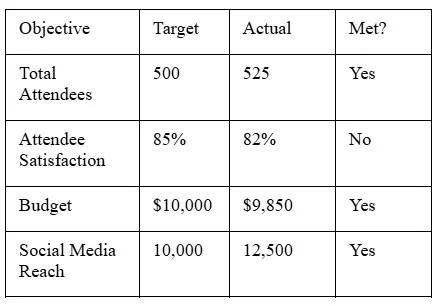
First off, did we actually do what we set out to do? We need to compare our results directly to the goals we set before the event even started. This means looking at things like attendance numbers, attendee satisfaction scores, and whether we stayed within budget. It’s a straightforward check to see if we met the basic requirements.
Here’s a quick look at how we stacked up:
Pinpointing areas for improvement
Looking at the table, it's clear we missed the mark on attendee satisfaction. We need to figure out why. Was the content not engaging enough? Were there issues with the venue? Maybe the speakers didn't connect with the audience as well as we hoped. We should also consider feedback that mentioned long wait times for certain sessions or problems with the AV equipment. These are the pain points that can make or break an event.
We need to be honest about what didn't go as planned. Ignoring problems won't make them go away, it just means we'll likely repeat the same mistakes next time. Identifying these weak spots is the first step to making things better.
Recognizing what worked well
Of course, it wasn't all bad news. We exceeded our attendance goals and got great engagement on social media. The budget was also managed well. It’s important to celebrate these wins and understand why they happened. Perhaps our marketing efforts were particularly effective, or the chosen venue was a big hit. Identifying these successes helps us know what to replicate in the future. We should also note positive comments about specific sessions or networking opportunities that attendees really enjoyed.
Translating Insights into Actionable Playbooks
So, you've gone through the whole event, gathered all the feedback, and figured out what went right and what could have been better. Now what? The real magic happens when you turn all that information into something useful for next time. This is where playbooks come in. Think of them as your event's instruction manual, built from actual experience.
Developing standard operating procedures from feedback
After an event, you'll have a bunch of notes on how things actually went down. Some processes might have been clunky, others might have worked like a charm. The goal here is to take those observations and build them into clear, step by step guides. For example, if registration was a bottleneck, your new playbook might detail exactly how many staff are needed at peak times, what information needs to be ready, and a backup plan if the system goes down. It's about making sure the good stuff becomes the standard way of doing things and the not so good stuff gets fixed.
Creating role specific action plans
Not everyone at an event does the same job, right? So, the lessons learned shouldn't be one size fits all either. You need to create specific action plans for different roles or teams. The AV crew will have different needs than the catering team or the volunteer coordinators. A playbook for the stage manager might include specific protocols for handling technical glitches, like how long they can delay a show before needing to consult a supervisor. Meanwhile, the volunteer manager's playbook could outline procedures for dealing with no-shows or rule violations. This makes sure everyone knows exactly what's expected of them and how to handle common situations based on what you learned.
Integrating local adaptations into global standards
Many events happen in different places, and what works in one city might need a tweak in another. Your playbooks should account for this. You can set global standards for things like safety or core branding, but then allow for local flavor. For instance, a food vendor section in a global event playbook might require certain hygiene standards and a percentage of vegetarian options. But, the local team in Mexico City could be encouraged to add traditional street food, while the team in Tokyo might incorporate a local tea ceremony. It’s about keeping the main structure solid while letting local teams add their unique touch, making the event feel authentic to its location.
The key is to make these playbooks living documents. They shouldn't just sit on a shelf. Regularly review and update them based on new experiences. This way, your event planning gets smarter and more efficient with every single event you run.
Implementing Feedback Loops for Future Events
So, you've gone through the whole event, gathered all the feedback, and figured out what went right and what needs a tweak. Now what? The real magic happens when you actually use that information. This is where we turn those notes and observations into something concrete that makes the next event even better. It’s all about building a system so you’re not reinventing the wheel every time.
Communicating debrief findings to the team
First things first, everyone involved needs to know what you learned. Don't let that valuable feedback sit in a report no one reads. Share the key takeaways, the wins, and the areas for improvement. Make it clear and easy to understand. Think about how different team members will best receive this info. Some might like a quick email summary, others a team meeting, and some might prefer a visual chart.
- Quick Wins: Highlight successes to keep morale up
- Areas for Growth: Clearly state what needs work, with specific examples
- Action Items: Assign responsibility for any follow up tasks
It’s important that the team feels heard. When people see their feedback leading to actual changes, they’re more likely to participate fully in future debriefs.
Updating event planning resources
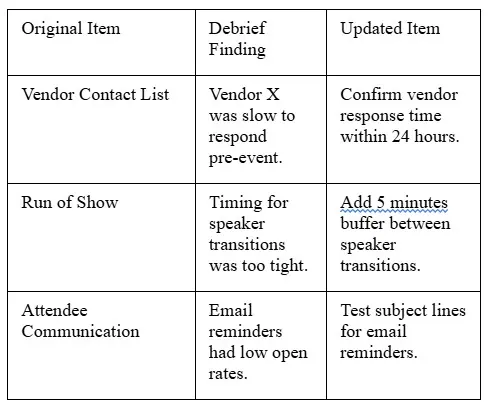
This is where the debrief findings become part of your permanent toolkit. Take the lessons learned and update your templates, checklists, and guides. If a particular vendor was amazing, note that down. If a certain communication method worked really well, add it to your standard operating procedures. This makes sure that good practices stick around and that common mistakes are avoided.
Here’s a quick look at how you might update a planning checklist: