Every organizer we talk to has the same morning. Three admin panels, two spreadsheets, a WhatsApp group with the venue, and one question: how are sales going? By the time they have the answer, the coffee is cold, and the answer is usually already wrong, because the numbers in the spreadsheets don't match the numbers in the payment system.
We built XTIX to fix ticketing. The Growth Assistant exists to fix that morning.
The idea: the briefing should arrive, not be chased
We started from a boring observation: organizers don't lack tools, they lack a single picture. Sales live in the ticketing platform. Ad spend lives in Meta and Google. Website behavior lives in Google Analytics. Settlements live in emails from payment providers. Nobody has time to stitch all of that together every morning, so most organizers run on gut feel until the day of the event.
So we asked a different question: what if the picture just arrived?
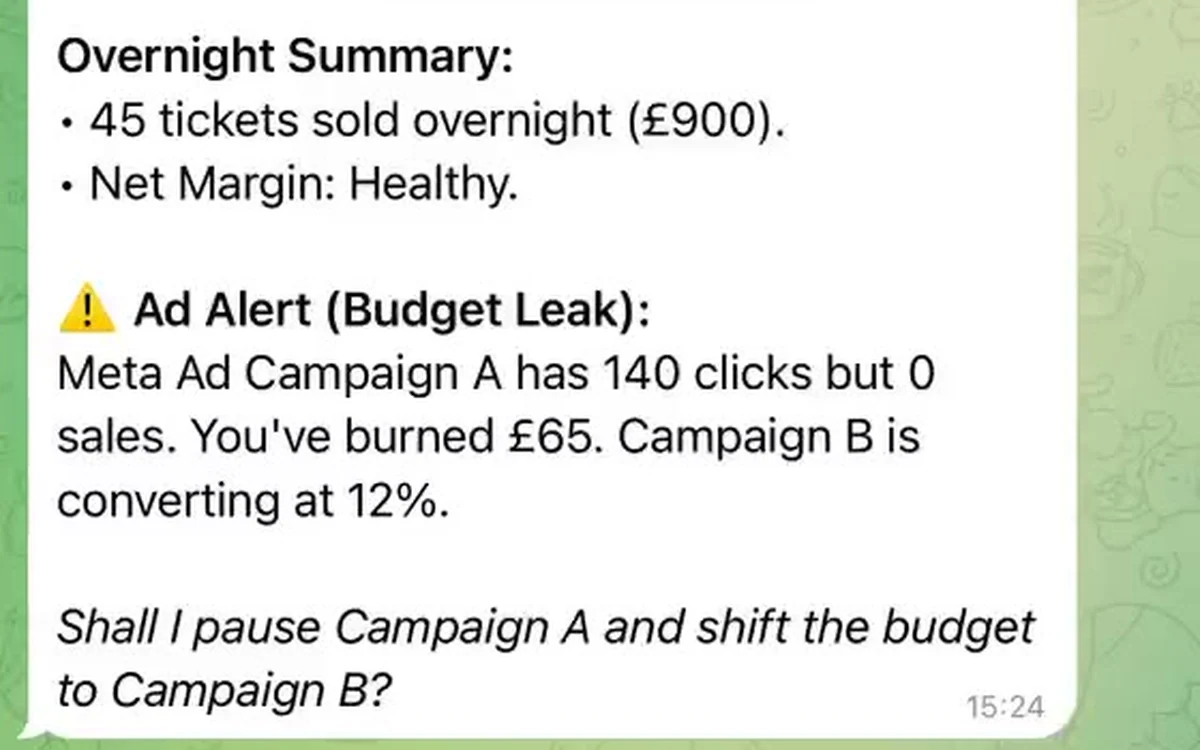
Not a dashboard to open. A message. At 9am, in the chat you already use. Short enough to read while holding coffee: yesterday's revenue, how each event is filling, what's running low, whether the sales pace will get us to a full house, and one thing worth doing today.
That's the Growth Assistant.
What it does today
The assistant is a chat, WhatsApp or Telegram, that knows everything the organizer has agreed to share with us. Concretely:
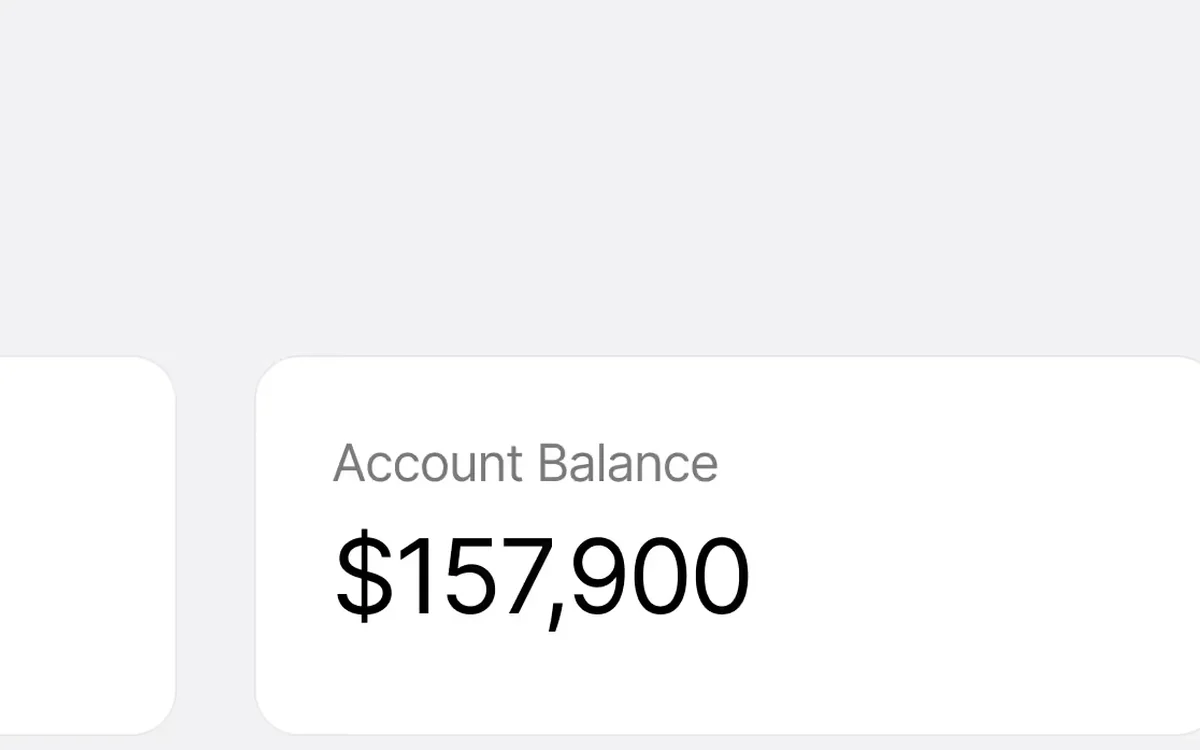
- Morning briefing. Yesterday's revenue, today's balance, how each event is selling against capacity, alerts (sold-out categories, events that are falling behind pace), and where sales came from if UTM tracking is on.
- Money questions. "Where's my money?" gets a real answer: earned, already paid out, coming next payout. No login, no PDF hunting.
- Sales pace and forecasts. "At this pace, the balcony sells out in four days, the main hall in twelve." Enough to plan the next ad wave, or call the artist.
- Alerts, not noise. When the Early Bird tier sells out, the organizer hears about it immediately, with a suggested next step. When sales are behind pace, they hear it while there's still time to act.
- Settlement and reporting. Gross, fees, net, payout date, and the branded PDF for the accountant, generated without anyone opening a spreadsheet.
- Payment follow-ups. When a payment fails, the assistant flags it in the briefing. Our team follows up with the buyer, the organizer doesn't chase customers, we do. (That's a deliberate line: recovery is the platform's job, never a burden on the organizer.)
What it does not do matters just as much. It doesn't make final decisions. It doesn't touch creative work. If it suggests opening the next ticket tier, the organizer confirms. Control is the point.
How we build it
Under the hood, the assistant runs on Hermes, an internal agent platform we've been building for our own operations. (The same platform that runs parts of our daily reporting and support work. Yes, we dogfood our own tools.)
A few things we've learned building it:
1. The product is the message, not the model. The magic isn't the language model, it's that the assistant has clean, trusted access to the data. Sales, categories, refunds, venue capacity, payout status, UTM sources. We spent most of our time making data correct and explainable, not making the assistant "smarter." If the briefing says 442 of 500 tickets are sold, that number has to be exactly right, every day. One wrong number kills a week of trust.
2. Scheduled work beats asking. The assistant doesn't wait to be asked, a morning briefing is a scheduled job that runs before the organizer wakes up. Same for the weekly summary, the post-event debrief, the payout reminders. The proactive part is what makes it feel like a teammate instead of a tool.
3. Three levels of learning. Industry knowledge (how event economics work, which metrics matter), the organizer's own history (what genres sell, what price points work, how this venue usually fills), and the organizer's explicit rules ("if we're below 60% two weeks out, suggest a flash sale"). Rules always win. The assistant is teachable, and the organizer is the teacher.
4. Every action is logged and reversible. The assistant keeps a journal of everything it did, when, and with what result. "Sent abandoned-cart offers to 22 buyers, 7 came back." If an organizer doesn't like something, they see it, they say so, and it doesn't happen again. No black box.
What's hard
Building the assistant exposed how fragile most "AI products" are in practice.
- Trust is the bottleneck, not technology. People won't follow a recommendation from a system they don't understand. That's why every suggestion comes with the reasoning attached, and why we never present a forecast as a promise.
- Payment data is a mess. Failed payments, 3-D Secure, declined cards, retries, the same buyer can look like three different people in three different systems. Untangling that took the most engineering time and is still the most valuable thing we do.
- Saying no. There's a long list of things an assistant could do that we deliberately don't build: creating events, talking to buyers on the organizer's behalf, spending money without a confirmed rule. Every one of those was a "yes, but later" conversation.
What's next
- Reports the organizer configures. "Send me a weekly breakdown of the tour," "drop marketing from the briefing," "include comparison to last year's event." The briefing becomes something organizers shape, not a fixed template.
- Autopilot within boundaries. Organizers will be able to set rules, "if sales are below X two weeks out, offer a limited discount up to Y budget", and let the assistant execute within those limits, with a control group so the effect is honestly measured.
- More channels. The chat is the start; the same assistant will meet organizers where they already work.
Why we're writing this
Because "AI assistant" is a product category we're skeptical of, and we'd rather show our work.
We're building the Growth Assistant the slow way: on top of real ticketing data, with real organizers, with the human always in the loop. It doesn't replace the organizer, nothing can. It does the part of the job that nobody enjoys: watching the numbers, spotting what's falling behind, and making sure no money gets lost in the gap between systems.
The coffee stays hot. The picture arrives. The organizer runs the show.
Want to see it? We give live demos to organizers, no setup, no slides, just your event’s real data. See Growth Assistant → or write to [email protected].