Running events is tough, and figuring out how to get people to sign up without just slashing prices can feel like a puzzle. We all know that constant discounts can eat into profits, making it hard to stay afloat. But what if there were smarter ways to use promo codes for events? This article looks at how to use discounts strategically, protect them from being misused, and explore other cool incentives that can get people excited about your event, all while keeping your revenue healthy. Let's get into it.
Key Takeaways
- Use promo codes for events strategically by aligning them with seasonal trends and timing offers for maximum impact, creating urgency with event-specific deals.
- Protect your promo codes from being shared on aggregator sites by using single-use codes for VIPs and actively monitoring for and revoking compromised codes.
- Explore value-based promotions beyond simple discounts, such as offering free gifts with purchase, creating attractive event bundles, and building loyalty programs for repeat attendees.
- Optimize the checkout process by hiding the coupon field by default and using link-based discounts to simplify redemption and reduce cart abandonment.
- Turn influencer codes into affiliate links and test different discount structures to build genuine connections and drive event attendance, while also recovering lost sales through targeted offers like abandoned cart incentives.
Strategic Discounting for Event Promotions
When it comes to event promotions, just slashing prices can really hurt your bottom line. Instead, think about how to offer more value. This means moving away from simple percentage-off deals and looking at other ways to get people excited about attending. It’s about making the event itself feel special, not just the price tag.
Leveraging Seasonal Trends for Event Promo Codes
Think about when your event naturally fits into the year. Are you planning a summer festival? Maybe a holiday market? You can tie your promotions to these times. For instance, a "Summer Kick-off" discount could get people thinking about outdoor fun. Or a "Holiday Cheer" offer for a winter event. This makes the discount feel more relevant and less like a random price cut. It taps into what people are already thinking about. Timing your offers around these natural seasonal moments can make them much more effective.
Timing Your Promo Codes for Maximum Impact
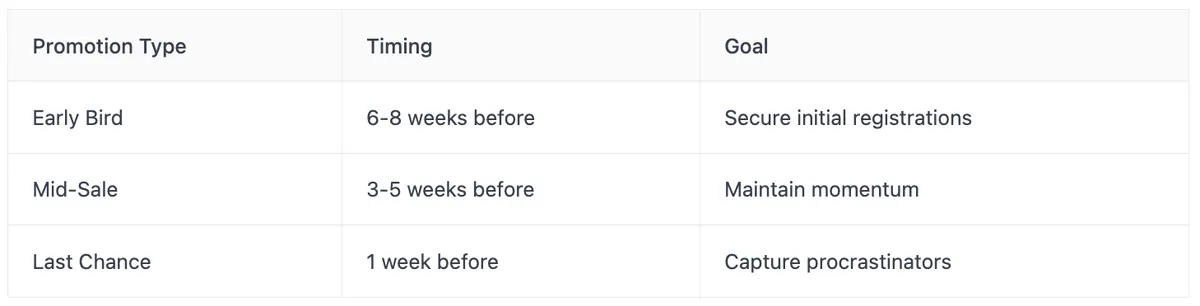
When you release a promo code matters. Don't just put it out there and forget it. Think about when people are most likely to buy tickets or register. A week before the event? Maybe a few days? You could also offer early bird specials to reward those who commit early. Or, a last-minute push for people who are on the fence. It’s a balancing act. You want to create excitement without giving people too much time to forget or lose interest. Consider a table like this to map out your timing:
Creating Urgency with Event-Specific Offers
People are more likely to act if they feel like they might miss out. This is where event-specific offers shine. Instead of a generic "10% off," try something like "Get 15% off your ticket if you register by Friday!" or "The first 50 attendees get a free welcome gift." These kinds of offers create a sense of scarcity or a limited-time opportunity. It encourages people to sign up sooner rather than later. You can also use phrases that highlight the unique nature of the event, like "Don't miss our exclusive [Event Name] offer!" This makes the deal feel special and tied directly to the experience they'll have. It’s a smart way to boost attendance without just lowering your prices across the board. You can find more ideas on effective discount strategies at [66c7].
Protecting Your Promo Codes from Poaching
It’s a real bummer when you put together a killer promo code, maybe for a special event or an influencer collaboration, only to see it plastered all over discount aggregator sites. This isn't just annoying; it messes with your analytics, can lead to overspending, and makes your exclusive offers feel anything but special. We need to get smart about how we share and manage these codes.
Combating Discount Aggregator Sites
These sites thrive on sharing codes widely. To fight back, think about making your codes more temporary or exclusive. For instance, you could offer flash sales that only last 24-48 hours. This creates a sense of urgency and limits the window for widespread sharing. Another tactic is to use unique, single-use codes for specific groups, like your VIP customers. This makes it much harder for general aggregator sites to get their hands on them. It’s about making your deals harder to find for the masses.
Implementing Single-Use Codes for VIPs
Giving out unique codes for your most important customers is a solid move. Instead of a generic code like "EVENT20" that anyone can use, you generate a code specific to an individual, like "JANE-DOE-EVENT20". This code only works once. It’s a bit more work upfront, but it keeps your general promotions from being abused and makes your VIPs feel truly valued. Plus, it helps you track exactly who is using what, giving you cleaner data for your influencer marketing campaigns.
Monitoring and Revoking Compromised Codes
Keep an eye on your promo code usage. If you notice a sudden spike in a particular code being used, or if it starts appearing on sites it shouldn't be on, it's time to act. You can often set up alerts for unusual activity. If a code seems to be compromised, don't hesitate to revoke it immediately. This might mean a few people miss out, but it protects your overall promotion strategy and budget from widespread abuse. It’s better to cut your losses on one code than to let the problem spread.
Value-Based Promotions Beyond Discounts
Sometimes, just knocking a few bucks off the price isn't the best way to get people excited about your event. Instead, think about adding extra value. This means giving customers something more, something they wouldn't normally get, which can be way more appealing than a simple discount. It's about making the overall experience feel richer.
Free Gifts with Purchase for Events
Offering a free gift with a ticket purchase can really make your event stand out. It's not just about the ticket price anymore; it's about the bonus item they get. This could be anything from branded merchandise to a sample of a partner product. For example, imagine a music festival offering a free pair of custom sunglasses with every VIP ticket. It adds a tangible perk that attendees can enjoy during and after the event. This strategy can also help clear out excess inventory or introduce attendees to new products.
Bundling Offers for Event Attendees
Bundling is a smart way to increase the perceived value of your event tickets. Instead of just selling a ticket, you can package it with other related items or experiences. Think about offering a ticket that includes early access to the venue, a special merchandise discount, or even a digital download of event highlights. A conference could bundle a ticket with a workshop session or a networking lunch. This makes the ticket price seem more reasonable because attendees are getting more for their money. It’s a win-win: customers feel like they’re getting a great deal, and you can potentially increase your overall revenue per attendee.
Loyalty Programs to Drive Event Repeat Business
Getting people to come back to your events year after year is key. Loyalty programs are perfect for this. You can reward attendees who have supported your events in the past with exclusive perks. This might include early bird access to tickets for the next event, special seating, or even a discount on future purchases. Building a program that recognizes and rewards repeat customers helps create a stronger connection with your audience. It shows you appreciate their business and gives them a good reason to choose your event again. According to a Wirecard survey, a huge 92% of consumers are influenced by rewards at least some of the time, so this is definitely something to consider for building trust and engagement.
When you focus on adding value, you're not just selling a ticket; you're selling an experience. This approach can make your event more memorable and encourage attendees to become loyal fans who look forward to your future events.
Optimizing the Checkout Experience
Making sure your checkout process is smooth is a big deal for turning browsers into buyers. If it's clunky or confusing, people will just leave, even if they really wanted what they were looking at. We want to make it as easy as possible for them to finish the purchase, right?
Hiding the Coupon Field by Default
Have you ever noticed that empty coupon box at checkout? It's like a siren call for bargain hunters. As soon as people see it, they start thinking, "Am I missing out on a deal?" This often leads them to leave your site to hunt for a code, which is the last thing we want. A simple fix is to hide this field by default. You can either remove it entirely if you don't have active codes, or just show it as text like "Promo Code" that expands into a field only when clicked. This small change can stop a lot of potential cart abandonment.
Utilizing Link-Based Discounts
Instead of making customers copy and paste codes, why not send them a direct link? When you email a discount, the link can take them straight to a page where the discount is already applied. It cuts out a step and makes the whole process feel more automatic. This is a really clean way to deliver a promotion without the hassle of codes. You can learn more about streamlining your customer checkout flow here.
Simplifying Promo Code Redemption
Ultimately, the goal is to make using a promo code as painless as possible. If you are using codes, make sure they're easy to find and apply. Think about single-use codes for VIPs or special events, which also helps prevent codes from being shared too widely. The less friction there is at checkout, the better your chances of a completed sale. It’s all about removing those little roadblocks that can trip people up.
Influencer Code Strategies for Events
When you're working with influencers for your events, it's not just about giving them a discount code to share. It's about making that code work for you, and for them. Think of it as a partnership, not just a transaction. You want to make sure the codes you hand out are actually going to drive sales and bring in new people to your event, without just giving away the farm.
Turning Influencer Codes into Affiliate Links
This is a big one. Instead of just a discount code, why not turn it into an affiliate link? This means the influencer gets a commission for every sale that comes through their unique link. It gives them a direct stake in promoting your event. They're more likely to put in the effort if they know they'll earn a percentage of what they sell. Plus, it makes tracking super easy. You can see exactly who’s bringing in the most business. It’s a win-win situation, really. You get sales, they get paid for their work, and your analytics are way cleaner. It’s a smart way to get more bang for your buck and build stronger relationships with your partners. You can find some great ideas for discount strategies on Shopify's site.
Testing Different Discount Structures
Not all discounts are created equal, and what works for one influencer might not work for another. You've got options here:
- Percentage Off: Like 10% off the ticket price. This is good for higher-priced tickets and can feel like a bigger saving to customers.
- Fixed Amount Off: Say, $20 off. This can be really appealing for lower-priced tickets or when you want to offer a specific, easy-to-understand saving.
- Free Shipping/Delivery: If your event involves physical goods, this can be a huge draw. It removes a common barrier to purchase.
- Bundled Offers: Maybe the influencer's code unlocks a special package, like a ticket plus a piece of event merchandise.
It’s worth trying out a few different approaches to see what gets the best response. Track everything. See which codes are getting used the most and which ones are bringing in the most revenue. You might be surprised by the results.
Building Genuine Connections Through Event Partnerships
Beyond just the discount itself, think about how you can build real relationships. Make sure the influencer's brand and voice align with yours. If you're promoting a sophisticated art exhibition, a super casual, slang-filled promotion might not fit. Give them clear guidelines, but also trust their creative process. They know their audience best.
Remember, the goal isn't just to move tickets; it's to create authentic buzz and bring people to your event who are genuinely excited.
Here’s a quick rundown of what makes a good influencer partnership:
- Clear Communication: Provide a simple guide with do's and don'ts. Tell them where and when to mention the code for maximum impact.
- Authenticity: Encourage them to share their honest experience with your event or product.
- Mutual Benefit: Ensure the deal is fair and rewarding for both parties. This builds long-term partnerships.
By focusing on these aspects, you can make your influencer campaigns much more effective and profitable.
Recovering Lost Sales with Event Offers
It's a bummer when folks add an event ticket or a related item to their cart, then just... leave. Happens all the time, right? But instead of just letting that sale slip away, we can actually use that moment to try and win them back. Think of it as a second chance to convince them why your event is something they really don't want to miss.
Abandoned Cart Offers for Event Registrations
When someone bails on their cart, sending them a friendly reminder email is a good start. But to really get them back, sweeten the deal. Maybe offer a small discount on their ticket, or perhaps free access to a special pre-event webinar. It’s about giving them a little nudge to complete the purchase. Studies show these kinds of emails can actually bring back a decent chunk of lost sales, which is pretty great when you think about it. It’s a simple way to recover revenue that would otherwise just vanish. You can even automate these reminders so they go out automatically after a certain period of inactivity, making sure you don't miss any opportunities. For event registrations, this could be a game-changer. We found that offering a small incentive can really help convert those potential sales.
Time-Limited Coupons for Event Sign-ups
Another tactic is to create a sense of urgency. If you know someone was interested enough to put something in their cart, you can hit them with a time-sensitive coupon. Say, "This discount is only good for the next 24 hours!" This plays on that fear of missing out, or FOMO as people call it. It encourages them to act fast before the offer disappears. You can set these up easily with various tools, making sure the coupon code only works for a short window. This is especially effective for events where there's a clear start date and people are already thinking about when to commit.
Exit Popups with Event Incentives
What about those people who are about to click away from your site entirely? An exit-intent popup can catch them right before they go. This popup can display a last-minute offer, like a discount on their event ticket or a special bonus item if they complete their registration right then and there. The key is to keep the message short and the offer clear. Something like, "Wait! Get 10% off your ticket if you register now." It’s a final attempt to grab their attention and persuade them to stay and buy. It’s a pretty direct way to try and save a sale that seemed lost.
Building Customer Loyalty Through Event Incentives